
If you have a taste for the absurd and speak Spanish, I recommend you check out the truly original and ingenious MIVIEJA created by two truly original and ingenious friends of mine in Spain. They really crack me up!
If you have a taste for the absurd and speak Spanish, I recommend you check out the truly original and ingenious MIVIEJA created by two truly original and ingenious friends of mine in Spain. They really crack me up!
Filed under Friends / Family, Living la vida española

A few weeks ago I wrote about the bewildering infatuation of the Spanish intelligentia with the independence from Morocco of Western Sahara, a former Spanish colony.
What is so strange about this relationship is that the end of Spanish rule over Western Sahara in 1975, some twenty years after Spain and France relinquished control over most of the rest of Morocco, remains in the collective Moroccan mind as a landmark in the history of independence and sovereignty. Spanish interference into the claims over Western Sahara – without getting into their merits here – are reminiscent of the Franco era and foreign imperialism.
Flash forward these weeks and upon return from Christmas, I find that my hipster neighbors (who had an anti Iraq war “No a la Guerra” banner a few years ago) were now hanging the flag of the Polisario, the rebel group in favor of an independent Western Sahara.
What does the Western Sahara have to do with my neighbors? Why do they care? They are against a war in one Arab country but in favor of rebels in another? Do they even know that the Polisario was supported in the 1970s by the Franco regime and is now largely subsidized by Algeria? With the unemployment rate in Spain at 20% and an inept government in power, you’d think they would be more worried about what’s happening outside their own window.
Filed under Living la vida española
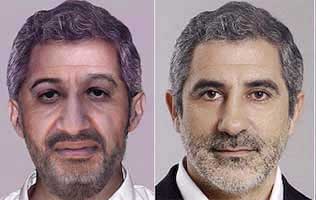
The barely relevant Spanish Politician, Gaspar Llamazares, of the equally unimportant far left wing party, Izquierda Unida, is upset after his image was used by the FBI to generate its new updated profile of what Osama bin Laden. Of course, FBI clumsiness should be no surprise to anyone (heck, we bomb countries every time the FBI and CIA fail to communicate with each other), but it is another thing for Mr. Llamazares to even hope to be sufficiently interesting enough to become a target of American intrigue.
(Though I do suppose it is noteworthy to mention that the son of former Izquierda Unida party leader, Julio Anguita, died while embedded as a journalist with the U.S. military early on in the Iraq War, a war which Izquierda Unida vehemently protested).
Filed under Living la vida española

Without getting into the merits of the Sahwari people’s claims over the disputed territories in Moroccan controlled Western Sahara, it is hard for me to understand what a group of Spanish actors have to do with any of it.
The story goes something like this. Spain had colonies in Northern Morocco between 1912 and 1956, and in Western Sahara from 1884 all the way until 1975. Throughout most of that time period, Morocco (and Mauritania to a less extent) laid claim to that territory. Right before Franco’s death and after the massive Moroccan public demonstrations against Spanish colonization known as the Green March, Spain finally relinquished its control over the area. The land was then divided between Morocco and Mauritania, but after pressure from the Algerian funded and based Polisario (a pro-Sahrawi rebel group), Mauritania abandoned its portion of the land. In 1991, the U.N. created MINURSO to enable a cease fire between the Polisario and Morocco and to allow for an eventual referendum on the sovereignty over the territory. That referendum has yet to occur, and Western Sahara remains fully under Moroccan control, with a majority of its residents now hailing from the rest of Morocco.
Flash forward to November 2009. The pro-Sahwari human rights activist, Haidar Aminatu, was traveling to the Western Saharan city, Laayoune, and, according to Morocco, refused to enter with her Moroccan passport and insisted that her nationality be listed as Sahwari. As one can imagine, the Moroccan authorities denied her entry. She was then flown to the Canary Islands, sans papers, where she has refused to leave the airport until she is permitted to take another flight to Laayoune and has been on a hunger strike ever since. The Spanish government is now left in the middle of a game of wills between its neighbor and former colony, Morocco, and the human rights activist that the Spanish left is enamored with.
Then today, a group of Spanish actors and labor union politicians – including Pedro Almodóvar, Pilar Bardem, Ruth Gabriel, Juan Diego, Aitana Sánchez Gijón and Juan Diego Botto, – sent an email to Spanish King Juan Carlos requesting his intervention in favor of Haidar Aminatu.
For the most part, the Spanish side against the Moroccan government and in favor of Sahwari independence (whereas the U.S. government sides with Morocco). Not only was Western Sahara Spain’s last colony (Ceuta and Melilla not under discussion here), Spanish colonization of Morocco was also uniquely tied to the Franco regime; Franco had been the Commander of the Army of Africa which played a key role in the Spanish Civil War. On the other hand, for the Moroccans the Green March and the independence of the territory from Spain have become important historic assertions of pride, unity and sovereignty in the Moroccan national psyche.
It is ironic then that a group of pseudo-intellectual Spanish celebrities are so eager to take sides, regardless of all of the historic connotations of their position. What does Western Sahara have to do with them anyways? Other than being a vestige of Spain’s colonial and Franquista past.
Filed under Essays, Living la vida española

My normal Friday morning ritual includes reading all of the new movie, restaurant, art exhibit, and shopping reviews, regardless of the fact that I almost never actually go the cinema, restaurants, museums or shopping. This morning after discovering that for the second day in a row I had absolutely no hot water (this on the last day of repairs that have left me without access to my kitchen for the past two weeks), I opened the El Mundo Metropoli Section weekend guide to find the face of my friend Juanjo and the review of his restaurant, ConAmor.
ConAmor is where I always take visitors to Madrid for excellent Spanish food. I always order the fried eggplant and the paella with vegetables.
Filed under Digressions, Friends / Family, Living la vida española

Yesterday I was listening to a Talk of the Nation segment about “Modern Black Face: Offensive or Just Irrelevant”and was thinking about how similar diminutive portrayals of minorities in Spain are never discussed or ever considered offensive and are widely accepted as endearing (as I have complained about here, here, here, here and here).
Then later in the day I read a news story about “Nubian fury at ‘monkey’ lyric of Arab pop star Haifa Wehbe”.
One of the Arab world’s biggest pop stars has provoked a torrent of outrage after releasing a song which refers to black Egyptians as monkeys.
Haifa Wehbe, an award-winning Lebanese diva who has been voted one of the world’s most beautiful people, is now facing a lawsuit from Egyptian Nubians claiming the song has fuelled discrimination against them and made some Nubian children too afraid to attend school.
The row has cast fresh light on the position within Egyptian society of Nubians, who are descended from one of Africa’s most ancient black civilisations and yet often face marginalisation in modern Egypt.
Wehbe, a 35-year-old model turned actress and singer, is widely regarded as the Middle East’s most prominent sex symbol and has been no stranger to controversy in the past. Her skimpy outfits and provocative lyrics (one previous hit was entitled Hey, Good Little Muslim Boy) have earned her the wrath of religious conservatives and forays into the political arena have also sparked debate, including her very public praise for Hezbollah leader Hassan Nasrallah during the 2006 conflict between Israel and Lebanon.
The latest accusations of racism came after the release of her new song, Where is Daddy?, in which a child sings to Wehbe, “Where is my teddy bear and the Nubian monkey?”.
Wehbe has since apologised profusely for the offending lyrics, insisting they were penned by an Egyptian songwriter who told her that “Nubian monkey” was an innocent term for a popular children’s game. That hasn’t stopped a group of Nubian lawyers submitting an official complaint to Egypt’s public prosecutor and calling for the song to be banned.
“Everyone is upset,” said Sayed Maharous, 49, the Nubian owner of a coffee shop in Cairo. Adul Raouf Mohammed, who runs a nearby store, agreed. “To compare a human being to an animal is insulting in any culture. She has denigrated an entire community of people, and now some of our children are afraid to go into school because they know they will be called monkeys in the playground.”
The row over Wehbe’s song has highlighted a growing sense of communal identity among Nubians in Egypt, a country where the government has traditionally promoted a very monolithic brand of nationalism, sometimes to the exclusion of religious or ethnic minorities.
Despite breaking through into the cultural mainstream – several Nubian novelists are well-regarded within Egyptian intellectual circles and Nubian singers such as Mohammed Mounir are among the most popular in the country – Egypt’s estimated two million Nubians remain largely invisible on television and film, except as lampooned stereotypes.
Filed under Essays, Living la vida española
A simple cultural observation: in the U.S., you always say “Hello” when you casually pass an acquaintance on the street. In Spain, it is always “Adios”.
Filed under Digressions, Living la vida española

In the U.S. we call it Columbus Day, and it commemorates the discovery of the Americas by Christopher Columbus and is generally celebrated by Italian Americans. In Spain, it is called the Día de la Hispanidad, Fiesta Nacional (National Holiday) and marks the spread of Spanish culture around the world. Ironically, though, this day is also el Pilar — the patron saint of the military — and Spain celebrates Hispanidad by military parade — probably not the friendliest gesture to a world once conquered by force, imperialism and ethnocentrism. This is particularly odd considering that Spaniards are almost always uniformly anti-war. I suppose it would be like the U.S. celebrating Thanksgiving, not with Turkey, but with a procession of tanks and soldiers down Constitution Avenue.
Filed under Living la vida española
It’s hot, too hot. The daytime temperature in Madrid has not gone below 90F (30C) since the beginning of June, and I don’t have air conditioning. Three months of this continuous, unwavering heat takes its toll on you.
I could cool off at the local public pool, but that would be communism, right? Actually, I don’t go because a recent Leonard Lopate Show podcast totally turned me off to water leisure.
Sure, I would love to let myself get all worked up about
But it’s just too hot. Instead, I would rather spend time wedged between my fan and humidifier, finishing Olive Kitteridge, re-reading The Wind-Up Bird Chronicle, watching the new seasons of Mad Men and the continuously disappointing Weeds, following the revived Real Madrid, and stressing about my upcoming Moroccan wedding.
Filed under Digressions, Essays, Literature, Living la vida española, Obama 44

The last two years I have spent the first days of Ramadan with my (now) Moroccan wife. Just as she has achieved an appreciation for Rudolph and Santa, I have learned to share in her excitement for Ramadan. Unfortunately this year we won’t be able to spend these first days together. Fret not, I still found my way to a few Moroccan run stores in Madrid and bought some of the typical goodies, including my favorite pastries.
Comments Off on Ramadan Mubarak, Bessaha Wlhna
Filed under Friends / Family, Living la vida española

 Grave Error