Always On the Side of the Egg

haruki-murakami.jpg

Haruki Murakami, one of my literally idols (see #7, “25 Things About Me“), won this year’s Jerusalem Prize for literature, and my friend Sorin just sent me the link at Haaretz to Murakami’s acceptance speech, entitled “Always on the Side of the Egg”. Check it out: Continue reading

3 Comments

Filed under Literature

When the Shoe is on the Other Territory

ceuta-gib.jpg

In 2007, the Spanish King and Queen traveled for the first time during their entire reign to the Spanish enclaves of Ceuta and Melilla, located in Morocco. When Morocco officially expressed its discomfort with the visit, temporarily suspending diplomatic relations with Spain, the Spanish government and press fully and unapologetically defended the trip.

The Spanish press pulled out every argument in the book: Ceuta and Melilla were Spanish prior to the establishment of the modern Moroccan state and before the Alouite reign, were there a referendum in the two cities the citizens would overwhelming vote in favor of Spanish rule, etc. The government argued that as the cities were Spanish territories the royal family had every right and the obligation to visit their land and subjects; thus totally ignoring local sensitivities, as these lands have been regularly contested, sometimes violently, since the 15th Century. In yet another classic example of the Zapatero government’s verbal ineptitude (see the most recent), Spanish foreign minister Moratinos, against his government’s fundamental argument, repeatedly referred to King Juan Carlos’ trip to Morocco, not Spain.

Flash forward to today, and the shoe is on the other foot. This time it is Gibraltar and a member of the British royal family has traveled to that British rock in Spain. And guess who’s crying now? That’s right, the Spanish government has expressed its official discomfort with the visit, claiming that it was both unfortunate and offensive to the sensitivities of Spaniards. Sound familiar?

That is precisely the argument that the Moroccan government made to Spain — essentially a diplomatic appeal rather than a legal claim. Even though the Spanish press made it seem like Moroccans were protesting in mass numbers – which they were not — by permitting the Spanish King and Queen to travel to Ceuta and Melilla, the Moroccan government was put in a difficult domestic political bind, obliging it make a gesture that would at least mitigate any sense of injured nationalism. Nevertheless, the Spanish government completely ignored Morocco’s petition against the visit. So, should the British government be held to a different diplomatic standard in Gibraltar than the Spanish government in Ceuta and Melilla?

13 Comments

Filed under Essays, Living la vida española

Trial Lawyers, Health Care, and Conservative Schizophrenia

supreme-justices.jpg

Yesterday I was listening to a conservative pundit rant against the Obama administration’s health care ambitions, what he called a return to “big government”, and then, out of the blue, he whined about trial lawyers. Later in the day, I read about how the conservative, Republican nominated Supreme Court justices dissented, arguing against state rights; in other words in favor of federal preemption and federal regulation. Sounds like a major bout of conservative schizophrenia to me. Continue reading

Leave a comment

Filed under Essays

Lurch Meets Charleston Heston

lurch-meets-heston.jpg

Last night I saw Clint Eastwood’s Gran Torino. The movie did have a few touching (a.k.a cheesy) pro-immigration moments, but overall I would sum it up as Lurch meeting Charleton Heston. Eastwood spends the movie either sounding like Lurch from the Addam’s Family — errrrrrrr — or campaigning to take Charleton Heston’s role as the aging Hollywood face of the N.R.A. Was Eastwood purposely making the argument that the only way to protect one’s self, family and home from crime was to build up a personal weapon’s arsenal? Having found the only two minorities in the entire Republican Party (Michael Steele and Bobby Jindal) and promoting them as its new face, maybe the Grand Old Party hopes that Gran Torino will fool immigrants into believing that the Second Amendment alone can protect them from gangs.

Leave a comment

Filed under Essays

The White Tiger

white-tiger.jpg

Other than having a beautiful yet unknown actress, I couldn’t really grasp all of the hoopla surrounding Slumdog Millionaire, this year’s Oscar winner for best film. Slumdog does give a few insights and images into the extreme poverty and precarious conditions of India’s impoverished (see “Slumdog Millionaire: Best Fiction Ever Set in India“) but is ultimately nothing more than a feel good Hollywood film with an improbable ending. Most of the time while watching the film, I kept thinking of the much more powerful novel A Fine Balance by Rohinton Mistry. Then last night I finished Aravind Adiga’s The White Tiger.

Slumdog and White Tiger have a lot in common. They both won major award (White Tiger won the 2008 Booker Man Prize). They are also both set in India and portray the class struggle, corruption, and hopes of the India’s underclass. But between the two of them, there is a world of difference. The White Tiger is a gritty, angry tale of a poor man’s rags to riches climb, unrepentant — though struggling to come to terms with the means — of what it takes to become and stay rich. On the other hand, Slumdog’s protagonist happily — thanks to Hollywood honestly, a little help of police good will and good fortune — achieve millionaire status; in other words, good trumps evil through goodness. So if you want to see great images of India and a pretty girl, then watch Slumdog. But if you want less picture perfect version of how the poor live in India, try The White Tiger or A Fine Balance.

Now on the cover of my edition of The White Tiger, the USA Today is cited as calling the novel “one of the most powerful books I’ve read in decades. No hyperbole. This debut novel hit me like a kick to the head — the same effect Richard Wright’s Native Son and Ralph Ellison’s Invisible Man.” Personally, though, while The White Tiger is definitely like a revolutionary’s quick to the head, for overall power and ever-lasting effect, I would probably rather go with A Fine Balance.

My cover also quotes John Burdett, author of Bangkok B. (I am not familiar with either the author or his book): “Adiga is a global Gorky, a modern Kipling who grew up mad. The future of the novel lies here.” Interestingly, I didn’t perceive the future but was reminded of previous novels. My first thought after just the first page was of Rashid Al Daif’s Dear Mr. Kawabata, about a dying Lebanese soldier at the end of the Civil War writing a letter to the famous Japanese author Yasunari Kawabata. The White Tiger is written in the form of a letter to the Chinese premier, recounting the narrator’s life as a poor servant and ending as a wealthy entrepreneur.

Writing from a servant’s perspective is nothing new and immediately recalls Kazuo Ishiguro’s Remains of the Day. Ishiguro’s butler is the epitome of British well-manneredness, of knowing one’s place and never breaking the code of class and its corresponding responsibilities. Adiga’s White Tiger is almost the same exact character except that Adiga’s servant eventually takes charge, forcing his way out of servitude and revolting. The White Tiger is, in a sense, the Indian revolutionary’s Remains of the Day.

1 Comment

Filed under Literature

A Huge Deficit and Nothing But Guns to Show For It

aircraft-carrier.jpg

In today’s Washington Post, ultra-conservative commentator Charles Krauthammer writes that Obama wants to make the U.S. like Europe. Some Americans like me who actually live in Europe don’t think that is necessarily a bad idea.

I think I have already made this point ad nauseum, but I will repeat myself: throughout continental Europe, health care is free and universal and there is no noticeable difference in quality to that in the U.S. Meanwhile, public transportation and infrastructure is very noticeably superior in Europe and crime rates are much lower. And imagine, with fewer vacation days and labor strikes, American workers are actually on par with their French counterparts in terms of productivity. Continue reading

5 Comments

Filed under Essays

More Fascism than Socialism

corporate-jet.jpg

Recently, I have been making the argument that the U.S. should be defined more by government intervention than by truly free market capitalism. Since Reagan in the 1980s, in spite of the propaganda to the contrary, we have seen a consistent and significant increase in deficit spending and in the government’s share of GDP (i.e., more, not less, government participation in the economy). Thus, it seems completely absurd to hear Republicans suddenly complain that the Obama administration is somehow bringing back “big government”.

Maybe Obama’s promise to provide universal health care significantly alters the rhetoric of the role of government in society. Some conservatives may call that type of government intervention — spending tax payer dollars on services that go to tax payers — socialism, but then how would they describe the previous thirty years of government intervention? The government intervention in Iraq, equaling the cost of the stimulus; defense spending disproportionate to that of the rest of the world, without a convincing military victory since World War II; deregulation of financial services, health care, and industry that does not benefit the consumer or the free market but only the banks, HMOs, and oil companies; and policies that subsidize and perpetuate mega farms and uncompetitive mining and automobile companies at the environmental and health expense of citizens. When the government, be it at the helm of Bush or Obama, passes bailouts and stimulus packages that protect the mismanaged from the free market, that is not socialism. It is more like national corporatism, a.k.a. fascism.

Even the moral hazard argument has been applied with a clear bias. When people have been unable to meet their mortgages, there has been a tendency to say tough luck, caveat emptor. You were stupid and the government’s role isn’t to help the stupid. But when Wall Street can’t meet its obligations, it is still considered highly qualified, sophisticated, and its livelihood essential. Simon Johnson describes the banking industry as an oligarchy comparable to those in emerging markets. Ironically, the U.S. is bailing out the oligarchy with the exact opposite remedy we have always proscribed to failing economies. So then where do these bailouts and stimuli leave the U.S. on the political spectrum? Closer to socialism or fascism?

10 Comments

Filed under Essays

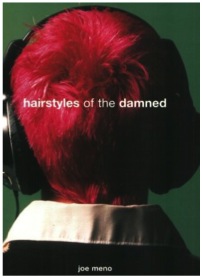
Hairstyles of the Damned

hairstyles.jpg

I just finished Hairstyles of the Damned by Joe Meno,  a coming of age tale about high school students set in 1990-91. Meno does a fantastic job of portraying all of the angst of high school: the conflict between trying to fit in and be unique at the same time, hormones run wild, parents and a loss of innocence about marriage and family continuity, and inevitability of adulthood. As reflected in the title, the characters’ hairstyles are one way that the teenagers define themselves. More interesting than their hair, though, is how music plays such an important role in their search for identity and belonging, but more so in what I would argue to be music’s role in moderating one’s emotions. Just think about how — be it metal, punk, hip-hop or dance — teenagers have always gravitated to loud music, muffling all of those conflicting voices that distract their already distracted minds.

Most of all, Hairstyles of the Damned simply reminded me of high school. Ironically, though, while so many of the characters resembled people I grew up with (I graduated one year before those in the book), my personal high school experience was completely different. For some reason, I never fell into any of those traps, for I was completely indifferent to being cool, fitting in, or listening to “cool” music. I spent my time playing soccer and listening to Reggae by myself. I was in my own world.

What I didn’t like about the book was that it made me feel old. Being a contemporary of characters set in a historic context, as mentioned in number 9 of 25, made me feel irreversibly fleeting, like the past.

2 Comments

Filed under Literature

Penelope Oscar Barcelona

pe.jpg

I suppose it is no surprise when mediocrity is rewarded with an Oscar. Nevertheless, I always feel a sense of dismay whenever a tearful actor or actress expresses gratitude to loved ones for some remarkably average performance in some remarkably average movie that deserves to be classified merely as a “show” rather than art.

Penelope Cruz’s Oscar award this year for Best Supporting Actress, therefore, should not have surprised me either. Yet instead of reinforcing mediocrity the Academy rewarded her total lack of credibility. Penelope Cruz’s performance in Vicky Cristina Barcelona was little more than  bilingual yelling. As a matter of fact, both her and Javier Bardem’s characters were two of the least plausible character portrayals I can recall. The fact of the matter is that after almost nine years of living in Spain and 20 years of traveling to Spain, neither character even remotely resembled any Spanish person I have ever dealt with. And Woody Allen deserves most of the blame. Continue reading

9 Comments

Filed under Essays, Living la vida española

Jazz Loft and Treasure Trove

In recent years some great live Jazz performances, dust-ridden and forgotten, have been discovered in the back of some warehouse. The most famous of these is a live performance of John Coltrane and Thelonious Monk playing together at Carnegie Hall. Perhaps even more exciting is the new discovery of 3,000 hours of tapes from a New York City loft where Thelonious Monk and other Jazz musicians hung out and practiced. While perhaps Monk preparing for his ground breaking Town Hall Concert is the most newsworthy aspect of these tapes, the mikes also spontaneously captured other moments that give a unique glimpse into Jazz’s past, including a drug overdose by Sonny Clark (another of my favorite Jazz pianists).

Leave a comment

Filed under Jazz