Category Archives: We The People

Twenty Years

I dug up this old photo from twenty years ago. It’s of the same view that Mr. Trump would have had at his inauguration this January as he looked over the Washington DC Mall from the Capitol. Every time I’d read about the crowd size controversy, I’d think about that photo from a time when I was still living in my hometown.

Twenty years ago it was 1997. The English Patient had just won the Oscars, and Titanic was out in theaters. Notorious B.I.G., whose songs “Hypnotize” and “Mo Money, Mo Problems” were hits that year, had just been murdered. And it was the year that Mother Theresa and Princess Di would die.

I was finishing my second and entering my third year of law school. Bill Clinton was a few years older than I am now, and Monica Lewinsky was a few years younger than I was then. In a matter of months scandal would break.

Twenty years ago, a president had to lie about smoking pot and about consensual sex with an intern, long before a president could openly say inhaling was the point or another one could brag about being able to grab a woman by her private parts without her consent.

Twenty years ago, Donald Trump was getting ready for his second divorce and was about to “move on” Melania. The Twin Towers were still standing in Lower Manhattan and no one had heard of Bin Laden. George W. Bush was not yet president and hundreds of thousands of Iraqis who were alive under a local dictator had not yet lost their lives to an American democracy. It would be a decade before the U.S. had its first black president or female presidential nominee.

In 1997, I was a few years away from my first cellphone, Apple still hadn’t made its comeback, and I got my email from AOL on a

desktop computer with a firm “you’ve got mail”. I made mix tapes, was building my CD collection, and apparently dedicated a lot of time to my hair.

Later that year, the Buena Vista Social Club soundtrack was released, with its stellar roster of vintage Cuban musicians, including the great Omara Portuando singing:

Si las cosas que uno quiere
Se pudieran alcanzar
Tú me quisieras lo mismo
Que veinte años atrás

[If the things that we wished for
Were ever attainable
Then you would love me the same
As you did 20 years ago]

Twenty years ago, I had no idea where and to whom my life would take me. Twenty years later, on the other side of the Atlantic Ocean, I wake up in the middle of the night to someone crying in the next room. I look at my wife sleeping next to me. I walk past my baby girl breathing softly, past my middle child snoring, to my eldest who’s calling for Daddy, and Daddy is me. A wife and three kids. A family. People I didn’t know or who didn’t exit twenty years ago. Who would have thought all this was possible in just twenty years and at such a young age?

Leave a comment

Filed under Digressions, Living la vida española, Parenthood, Trump 45, We The People

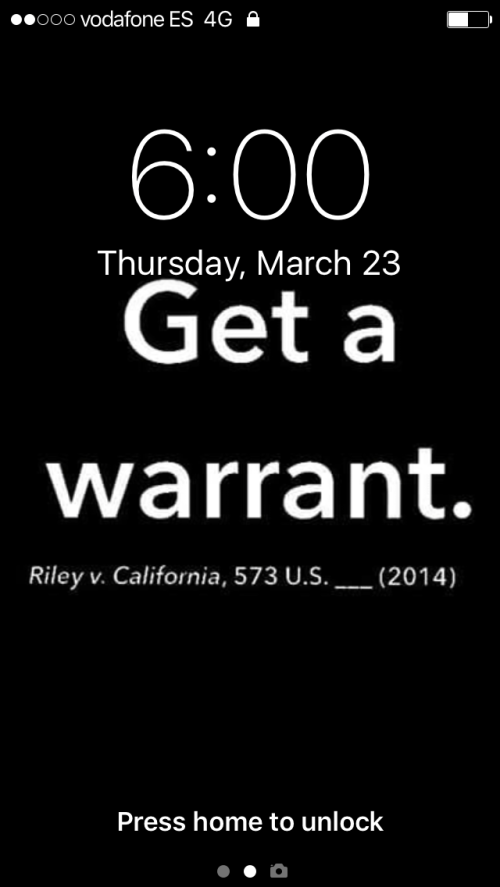
Get a Warrant

Been hearing stories of people being asked by TSA for access to their cellphones at airports, even on domestic flights. In theory, the Fourth Amendment is something both Republicans and Democrats should agree on.

So get a warrant!

Leave a comment

Filed under We The People

Brand USA® and What Makes America Great

As an American in Europe for more than fifteen years, I have a pretty clear idea of what makes America great and where we could also use some improvement. Contrast this month’s decision by the EU Court of Justice to permit employers to discriminate against employees based on religious practice to the U.S. courts’ repeated decisions to overrule or stay the sitting president’s orders to bar entry to nationals from six Muslim countries. And I am reminded of what I love about my country.

According the EU Court of Justice,

An internal rule of an undertaking which prohibits the visible wearing of any political, philosophical or religious sign does not constitute direct discrimination,” the court said in a statement.

This is, of course, the exact opposite of the right to freedom of expression, association and religion enshrined in the First Amendment to the US Constitution and guaranteed to Americans by more than two hundred years of legislation and jurisprudence. Europe has never experienced anything similar to our anti-discrimination laws, Civil Rights Movement, or other social movements to make the “the inalienable rights to life, liberty and the pursuit of happiness” of our Declaration of Independence available to all. Looking at the European court’s ruling with the eyes of an American lawyer, the Europeans have in fact perfectly defined and then legalized direct discrimination.

If you’re not convinced about the difference, read the rules prohibiting religious discrimination in the American workplace, including “religious garb”. Or read the judge’s decision on the second Trump travel ban:

According to Plaintiffs, the Executive order also results in “their having to live in a country and in a State where there is the perception that the Government has established a disfavored religion”
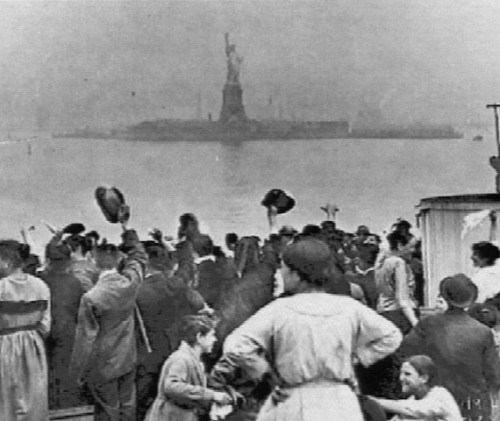
But isn’t that the real difference between how Americans and European define themselves? A large part of the American self-image is based on living in a society that does not promote or prohibit religion; in theory thus allowing for new entrants to compete for the American Dream based on economic ambition, rather than pure cosmetic and ethno-cultural assimilation. Of course in practice the reality has been less than optimal, but at least as a society we are able to aspire to the principles of our founding, and with the help of lawyers and activists, improve step by step. Where were the religious freedom activists when the EU Court of Justice gave its ruling? Meanwhile, there were scores of pro bono lawyers camping out at airports around the country when Trump passed his first ban.

On the other hand, Europeans have a lot of trouble figuring out what it means to be European other than simply being from Europe. So Europeans expect you as the new entrant to become just like them. To eat, dress, and talk like they do. In fact the biggest compliment a European can give you is “you are just like one of us”. Almost every single day of the week when I go to lunch an hour earlier than my colleagues here in Spain, I always get a comment about how strange I am for eating at 12:30, instead of at 2:00pm. Or for eating just a sandwich instead of a hot meal.

It’s no doubt that after having cleansed themselves of practically all non-Christians in the 20th Century, Europeans find any other form of religious expression, foreign and confrontational. No one finds it strange that women have to wear a veil when meeting the Pope at the Vatican, but could never understand why a woman would voluntarily wear a Muslim veil, unless under male duress.

They also forget that European women wore scarves well into the last century. In Madrid, for example, on the feast day of their patron Saint Isdro, local women and little girls were the traditional Chulapa dress and headscarf. And in my old neighborhood of Chamberí, if you saw a woman dressed like she was from Saudi Arabia, she was usually a Catholic nun (and teaching at a publicly subsidized charter school).

From an American perspective, having grown up in a multicultural town where my next door neighbors were Jewish, Iranian, Hindu, Black, Mormon, Nicaraguan, and Korean, there was nothing strange about having, for example, a Jewish or Sik boy sitting next to me on the yellow public school bus wearing a kippah or turban respectively or seeing my friend’s mother get the mail dressed in a sari.  As long as you bought into the fiction of the American dream (hard work and meritocracy), you could be whatever religion you wanted.

While I enjoy some of the significantly more civilized and advanced aspects of European life (few guns, low crime, free universal health care, generous vacation and paid maternity/paternity leave), when I read about the EU court permitting religious discrimination in the workplace by the same Je Suis Charlie hypocrites, I dearly miss my First Amendment right to be both free from religion and free to be openly religious.

But it’s not just the Bill of Rights. As my former boss and now president of George Mason University, Angel Cabrera, wrote yesterday in the Washington Post,

American innovation has been the envy of the world for the last century. Our ability to discover scientific breakthroughs, invent disruptive technologies and build successful companies that make those advances broadly available has been unparalleled. This creativity is the product of a culture that is uniquely open to new ideas, that encourages and rewards risk taking, that values people for what they achieve, not where they come from. It is also the result of a constant supply of talented people from outside the United States, many of whom came to this country seeking world-class education and an open society where they could thrive.

America is more than just my rights story. It’s a global brand with its can-do outlook. It’s about being solution-driven, making things happen, and moving forward. It’s about striving to be the best. But, people around the world don’t buy the American flag t-shirt or beach towel because they think it stands for “America First” or you are not welcome or trusted here. For that, they could have worn a different flag on their outfit.

Of all people, Mr. Trump of the Trump brand empire should understand that his words, travel bans, walls and nativism will have a major effect on the American brand.

So it is to Trump and Trumpsters that I ask: when you talk about “making America great again” what exactly is it that made us great in the first place? And when the rest of the world looks at USA® what is that you want them to buy into?
 

Leave a comment

Filed under Living la vida española, Trump 45, We The People

Becoming a Developing Country

Back in January I asked the question, “Have You Ever Been to a Developing Country” to describe how Trump and Republicans’ vision of America would bring America closer to resembling a developing country where you cannot drink the water, only the rich can prosper, educate themselves, afford health care, and where the government only spends money on national defense and the police.

Guess what? Now it is official. Trump’s budget proposal looks just like that of any third world Banana Republic. At least unlike third world despots, we know that our president is not milking the presidency for personal gain.

Leave a comment

Filed under Trump 45, We The People

Have You Ever Been to A Developing Country (or Making America Great Again)?

polluted-waterHave you ever been to a developing country? One where you can’t drink the water, the roads are full of potholes, the air reeks of car emissions and pollution, tree branches and fields are littered with plastic bags, trash piles up on street corners, you can’t afford to go to the doctor, public schools are atrocious, corruption is endemic, but at least you see people in police or military uniform everywhere?
china-air-pollution

In many developing countries, government investment in public services is almost zero, and government regulations of the environment or business activities are non-existent. The only real use of government spending is to build up the military and the police forces to protect the elite. Call it choosing growth over sustainability, if you like. But the effect is that only the rich, who can afford huge 4X4s, expensive private schools and hospitals, bottled water and cronyism can thrive.

And that’s basically Mr. Trump and the GOP’s vision of America. I suggest you get vaccinated, travel abroad, and then come back and see if you can stomach making America Great Again.

Leave a comment

Filed under Trump 45, We The People

The America I Hope They’re Watching

no-muslim-ban

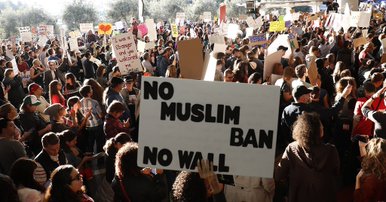
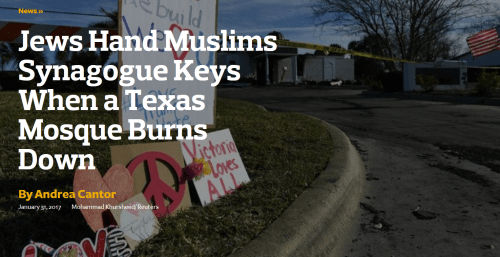
I hope that when people around the world look at what Trump is doing and saying, instead of the hate and ignorance, they’ll see the enormous outcry of support for Muslims’ humanity from average Americans at protests and on social media, including the massive support shown by Jewish Americans (despite the animus you’re supposed to believe exists between Jews and Muslims). Of course, Americans could have shown similar concern when we were bombing, droning and killing innocent Muslims throughout the Obama administration.

synogue

Nevertheless, I do hope that the world sees the protests in our streets, campuses, at airports, and on social media against the Trump administration’s policies and actions. In my own little social media bubble, I have read countless stories shared by my American friends of Jewish, Iranian, Arab, Latin American, European, and Asian backgrounds about their own families’ courageous journeys to America as refugees and immigrants during times of political violence or severe economic turmoil.

That is the America I hope the world is watching. They are the people that make me proud to be American.

I have also been very impressed by the many Germans  who — usually so reluctant to discuss their own country’s shameful past — have been sounding the alarm about how easy it is for a people and their nation to take a nose dive into the abyss.

Leave a comment

Filed under Trump 45, We The People

Things I’ve Read (recently)

things-ive-read

The following are some interesting and insightful things I have read in the past few months from the following three non-fiction works of history:

Servants of Allah traces the history and influence of the large number of African Muslims who were brought to the Americas during the Atlantic slave trade. The book documents how, contrary to the popular historical depiction of African slaves as peasants, many – especially those who were Muslim – were educated and literate. In particular, I find the following excerpt interesting as it serves as a reminder that in the populist Islam vs. the West narrative, Christianity isn’t always the brightest light on the hill:

Ibrahima pointed out “very forcibly the incongruities in the conduct of those who profess to be the disciples of the immaculate Son of God.” The Africans had experienced or witnessed forced conversion as a justification for slavery, whereas in their religion, conversion was a means of emancipation. They were in daily contact with religious men and women who were nevertheless sadistically brutal. The debauchery of Christian men who sexually exploited powerless women—not accorded the status of concubines—could not have escaped them. As slaves, they had experienced the Christians at their utter worse. Because they did not have a race or class consciousness, they saw the Americans primarily not as whites or as slaveholders but rather as Christians.

Similarly, Sapiens – a materialist recount of the evolution of humans in a historical context – helps put current Western/Christian fears of the Other into perspective:

These theological disputes turned so violent that during the sixteenth and seventeenth centuries, Catholics and Protestants killed each other by the hundreds of thousands. On 23 August 1572, French Catholics who stressed the importance of good deeds attacked communities of French Protestants who highlighted God’s love for humankind. In this attack, the St. Bartholomew’s Day Massacre, between 5,000 and 10,000 Protestants were slaughtered in less than twenty-four hours. When the pope in Rome heard the news from France, he was so overcome by joy that he organised festive prayers to celebrate the occasion and commissioned Giorgio Vasari to decorate one of the Vatican’s rooms with a fresco of the massacre (the room is currently off-limits to visitors). More Christians were killed by fellow Christians in those twenty-four hours than by the polytheistic Roman Empire throughout its entire existence.

The figures of 2002 are even more surprising. Out of 57 million dead, only 172,000 people died in war and 569,000 died of violent crime (a total of 741,000 victims of human violence). In contrast, 873,000 people committed suicide. It turns out that in the year following the 911 attacks, despite all the talk about terrorism and war, the average person was more likely to kill himself than to be killed by a terrorist, a soldier or a drug dealer.

With A Short History of Reconstruction what I found most interesting was how (i) terrorism, in the form of organized violence was employed successfully by Southern whites to maintain the status quo of white supremacy; (ii) an assortment of coordinated efforts by the police, the legislature and courts, and white civil society (often through terrorist violence) were employed in full force to sustain white supremacy and the economics of free labor; (iii) the political rhetoric to rationalize the above – for example, on taxation, federalism, and personal responsibility – are all very much alive and part of the conservative lexicon and worldview today; and (iv) all of the above defined the Jim Crow South up until 1970, a legacy which we undoubtedly still suffer. Continue reading

Leave a comment

Filed under Literature, We The People

There is Hope

donaldtrump_f

If just a little more than a half century after the close of World War II and the murder of 6 million innocent lives, Trump is capable of rehabilitating anti-Semites, and if 30 years after the Cold War, our president-elect can turn a Soviet KGB official-turned-despot from foe to roll-model, then there should be hope for Muslims around the world that one day the hatred they suffer will come to a happy end.

If a black man can become president in America? And if a white man who has admitted to committing fraud and bragged of sexual assault, has been married three times and unfaithful countless more, has gone bankrupt four times, lost $1 billion in one year and made the U.S. tax-payers pay for it for another 20, consistently rips everyone off, rides a golden elevator, and believes in absolutely nothing . . . if he can become a Republican and then elected president of the United States, surely anyone can. So if a fraud and phony can make it, you can too. The sky is the limit.

See, there is still hope for America and Americans.

Just be patient. The dream is alive. Sleep and dream.

Leave a comment

Filed under Trump 45, We The People

My Final Election Reflection: It Wasn’t So Unique

13clinton-master768

After the initial shock and hysteria of the Trump victory, I have had some time to reflect. My final conclusion is that in general terms the results of the 2016 U.S. Presidential Elections were pretty normal, with nothing out of the ordinary.

Let’s start with what we know about U.S. elections:

  • Americans are tribal and vote based on demographics rather than adherence to political ideals
  • Americans are complacent and apathetic; hence voter-turn out tends to be low
  • Because political parties are basically just branding, as such, they focus on fringe issues to differentiate themselves from each other. With a two-party system, this means that the partisan/sectarian split tends to be very close to 50-50% of the population
  • Because of the above, there are very few swing voters and the key to winning elections is not swaying voters, but getting more of your sect to the polls (ie, rallying voters) than the other team.
  • Because of changing demographics in favor of Democrats, the Republicans have an interest in making it as difficult as possible for certain parts of the Democratic constituency to vote.
  • The incumbent party generally loses the presidential election after two terms.

Now let’s look at this year’s facts and how voters behaved:

  • Obama currently has the highest approval ratings of any exiting U.S. president in recent history
  • The economy is performing relatively well, with low unemployment in states like Michigan where Hillary lost this year, but Obama won in 2012
  • There was low voter turnout
  • There was low voter turnout for Hillary
  • There was low voter turnout for Trump, with Trump receiving lesser votes in this election than Romney did when losing to Obama in 2012
  • There was almost no media coverage of the issues, 32 minutes in total on the three major networks.

So what do the combination of what we already knew and what we’ve seen this year tell us? That this was a pretty normal election. Here’s why:

  • Contrary to what you may be hearing, Americans are not angry. Otherwise, we would have seen large turnout, as we did in 2008. The economy is doing well, and Americans overall like the sitting president. But neither Obama nor Biden were on the ballot, so in theory there was no continuity candidate.
  • Without getting into a discussion as to why or if justified, Hillary was an unpopular candidate. She didn’t persuade Democrats to vote for her in 2008 and wasn’t able to articulate a new reason to vote for her in 2016.
  • There was no discussion of issues, which doesn’t really matter anyways because Americans vote based on sect, not policies. So it didn’t matter that Donald Trump – the New York City Playboy conman with entitled, gelled-back haired offspring– was the picture of everything Republicans have always hated about the Northeast.
  • It was consistent with our history that the Republican party (non-incumbent) candidate would win after two terms of a Democrat in the White House.

So put aside the alleged changing political dynamics, racism (there’s always been racism, heck, our country was founded on it), and Middle America’s political revolt and anger. Obama would have likely won by a landslide had he been able to run.

Twenty-five percent of voters, some 90 million people, didn’t show up. Trump did worse than Romney who lost big. Hillary was a horrible candidate because she was unable to rally Democrats. Americans continue not to give a damn and are increasingly more sectarian. These should be the stories of the day.

The fact that Trump was able to empower racists, xenophobes and anti-Semites is anecdotal, a negative externality of the campaign. Something to be ignored by White Privilege.

Our take away could be that the victory of a highly incompetent cheat and race-baiter who got a nudge from the FBI Director means that America as meritocratic and post-racial is pure myth. But being able to keep the fiction alive . . . that, my friends, is White Privilege.

Leave a comment

Filed under Elections 2016, We The People

If You Voted for Trump, Own it. All of It

Republican presidential nominee Donald Trump speaks at a Bollywood-themed charity concert put on by the Republican Hindu Coalition in Edison, New Jersey, U.S. October 15, 2016. REUTERS/Jonathan Ernst - RTX2P03M

UPDATED BELOW

I had been hoping to put together my overall thoughts on the outcome of the election, focusing on how this election was lost by Hillary Clinton. Not so much because Trump was a great candidate or because Americans were overtly racist – actually Obama has the highest approval ratings of any modern exiting president. So race is not the story. The fact of the matter is that Democrats didn’t want Hillary in 2008, and there was no new reason for a large number of Americans to suddenly want her now. The sad moral of the story was that – although one could argue that the Clinton’s did some good for the country – it was more than time for them to be retired and to just leave us all alone.

I was even going to give a few arguments about how besides Rudy Giuliani and Newt Gingrich suddenly becoming the second and third most powerful men in the world, the country definitively becoming a police state and the end of the bill of rights as we know it, likely the country would not change course. That’s the beauty (or tragedy) of our fictional political system, something that my father-in-law graciously pointed out to me when he saw his two American grandsons and son-in-law on the morning after. Plus Trump has never kept a promise, so why would he keep his campaign promises now?

But then this morning, I started reading and hearing first-hand accounts of multiple acts of racist, xenophobic, misogynistic and anti-Semitic acts of intimidation around the country. Things like Hispanic school kids being taunted by the classmates, chanting Build the Wall and your father is going to get deported, black women being assaulted in public by white men (with “Obama can’t help you now”), blacks and Hispanics being told to sit at the back of the bus, swastikas decorating buildings, and a Muslim American woman who got along with her neighbors for years but woke up to a sign on her lawn telling her to go back home.

If Trump had said, for example, vote for me and I will deport all Jews to Israel, and you voted for him, then I would tell you that voting for him was incompatible with our friendship. And if Trump said, as he did repeatedly, Muslims (which include my wife and children) would be banned from entering the country and you voted for him, then I would want to know why you thought that our friendship and my family were more dangerous than a Hillary presidency. Don’t tell me that Trump isn’t really going to do that. He’s already publicly said that there is something wrong with my family. Is there?

The thing is that the cruelest acts against humanity don’t happen because of isolated evil masterminds. They happen because of complacent masses looking the other way. I hate to use the Hitler analogy, but that is exactly what happened in Europe. Give the people a common cause and enemy, and they’ll commit the most atrocious acts in your name.

Of course, I am not claiming that the majority of Trump voters are deplorable, racist, xenophobic, anti-Semites. But everyone in the country who voted knew perfectly well that Trump was courting all of those extremist factions in our society, and by winning, there are Americans who now feel empowered to openly, publicly and without shame insult, intimidate and assault minorities.

Trump opened that can of worms, and if you voted for him, you have absolutely no excuse NOT to take ownership. What do Republicans call this? Personal Responsibility? So own it.

Don’t we tell Muslims that they are all collectively responsible for terrorists claiming to be Muslim? So take your own medicine and start owning up. Maybe these acts are temporary and will wane over the next few days, but they won’t until as a society we say they are unacceptable. If you voted for Trump, denounce the racism, xenophobia and antisemitism being perpetrated in your name, lest you too be a terrorist.

UPDATE 11/11/2016:

I apologize for beating a dead horse, but I keep hearing Trump voters saying that they should not be held accountable for the acts of other Trump supporters. But if you just voted for a guy who clearly made part of his campaign value proposition that (1) no Muslim could be trusted because a few Muslims were terrorists, and (2) Mexicans were racists, how can you now say that is it unfair to judge the whole group based on isolated actions of the few?

It’s like saying that I voted for Hitler’s Make Germany Great Again part but not the antisemitism, so you can’t blame me for the Holocaust. It doesn’t work that way. If you voted for Trump, you can’t now pick and choose what you voted for.

When I advocated for Obama in 2008, the moment he won, I immediately began criticizing those policies which I disagreed with and have done so ever since.. So if you don’t agree with the racism, xenophobia and antisemitism, then challenge the man you elected to disavow those who do or own it. It’s your country  now.

To the same extent, the Democratic Party needs to take ownership of why they failed so miserably to produce an electable candidate and platform. Over 90 million eligible voters did not vote. That is the true story of this election. The DNC has some explaining to do. Those who didn’t vote also need to own this.

Leave a comment

Filed under Elections 2016, Married to a Moroccan, We The People