Category Archives: Essays

No Swiss Minarets this Christmas

swiss-law.jpg

In general, I think that Juan Cole’s article today on the new Swiss law banning the building of minarets is oversimplified, but I do think he makes a few good points always overlooked in our they’re evil we’re good discourse:

Others will allege that Muslims do not grant freedom of religion to Christians in their midst. First of all, this allegation is not true if we look at the full range of the countries where the 1.5 billion Muslims live. Among the nearly 60 Muslim-majority states in the world, only one, Saudi Arabia, forbids the building of churches. Does Switzerland really want to be like Saudi Arabia?

Here is a Western Christian description of the situation of Christians in Syria:

In Syria, as in all other Arab countries of the Middle East except Saudi Arabia, freedom of religion is guaranteed in law . . . We should like to point out too that in Syria and in several other countries of the region, Christian churches benefit from free water and electricity supplies, are exempt from several types of tax and can seek building permission for new churches (in Syria, land for these buildings are granted by the State) or repair existing ones.

It should be noted too that there are Christian members of Parliament and of government in Syria and other countries, sometimes in a fixed number (as in Lebanon and Jordan.)

Finally, we note that a new personal statute was promulgated on 18 June 2006 for the various Christian Churches found in Syria, which purposely and verbatim repeats most of the rules of the Code of Canons of the Eastern Churches promulgated by Pope John Paul II.

That is, in Muslim-majority Syria, the government actually grants land to Christians for the building of churches, along with free water and electricity. Christians have their own personal status legal code, straight from the Vatican. (It is because Christians have their own law in the Middle East, backed by the state, that Muslims in the West are puzzled as to why they cannot practice their personal status code.) Christians have freedom of religion, though there are sensitivities about attempts to convert others (as there are everywhere in the Middle East, including Israel). And Christians are represented in the legislature. With Switzerland’s 5 percent Muslim population, how many Muslim members of parliament does it have?

It will also be alleged that in Egypt some clergymen gave fatwas or legal opinions that building churches is a sin, and it will be argued that Christians have been attacked by Muslims in Upper Egypt.

These arguments are fallacies. You cannot compare the behavior of some Muslim fanatics in rural Egypt to the laws and ideals of the Swiss Republic. We have to look at Egyptian law and policy.

The Grand Sheikh of al-Azhar Seminary, the foremost center of Sunni Muslim learning, “added in statements carried by Egyptian newspaper Youm al-Saba’a that Muslims can make voluntary contributions to build churches, pointing out that the church is a house for ‘worshipping and tolerance.'” He condemned the fundamentalist Muslims for saying church-building is sinful. And Egypt has lots of churches, including new Presbyterian ones, following John Calvin, who I believe lived in … Geneva. About six percent of the population is Christian.

Personally, I would prefer less mosques and churches and more schools. I’m just a secular kind of guy, although I should probably disclose that I am writing this while listening to Ella Fitzgerald dreaming of a White Christmas, Frank Sinatra wishing me a Merry Little Christmas, and Sammy Davis Jr. reminding me that it is Christmas all over the world. And it’s not even December, yet.
4 Comments

Filed under Essays

Getting Things For Nothing

dowd.jpg

One of the reasons why Americans are so indifferent to the U.S. invading other countries is because the wars usually don’t affect us at all. Do you think that all of the Republican war-mongers would be so eager to support the ongoing, ineffectual wars in Afghanistan and Iraq if Americans were actually made to pay for the wars instead of just borrowing the money from abroad? For example, George W. Bush did the unprecedented: he lowered taxes while fighting two wars. Eventually, but not on W.’s watch, both will have to be paid for.

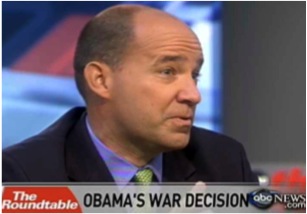
On today’s This Week with George Stephanopoulos, the round table discussed a completely hypothetical (it is never going to happen) surtax to pay for Afghanistan. Former Bush senior strategist Matthew Dowd (ironically) described the problem perfectly,

I agree there is not going to be a surtax, but I think this goes to a fundamental value that I think we’ve lost, which is that we can get things for nothing, that we can go to war and not have to pay for it, either by cutting the budget or doing something else. We have a war, we don’t have a draft. All of these sorts of things, that we, think, oh, by the way, we can go fight the most important war in the history of our country, but we’re not going to have a draft, we’re not going to pay for it, we’re not going to do anything that causes anybody to sacrifice.

Imagine legislation that required all military interventions to be paid for through taxes. The citizens’ notion of what was and was not in our vital national security interests would change drastically.

5 Comments

Filed under Essays, Obama 44

Friedman Delusional

friedman.jpg

This morning I woke up to one of the most shockingly delusional Friedman op-eds to date. Self-righteous Thomas Friedman astonishingly writes,

Yes, after two decades in which U.S. foreign policy has been largely dedicated to rescuing Muslims or trying to help free them from tyranny — in Bosnia, Darfur, Kuwait, Somalia, Lebanon, Kurdistan, post-earthquake Pakistan, post-tsunami Indonesia, Iraq and Afghanistan — a narrative that says America is dedicated to keeping Muslims down is thriving. [Emphasis added]

I would agree that there are in fact voices in the Muslim world that misinterpret U.S. attacks on Arab and Muslim countries resulting in countless civilian collateral damage as being a willful attempt to keep “Muslims down”. But to go from there and argue with a straight face that the opposite – that U.S. foreign policy has as its principal goal to rescue Muslims by bombing them – is a narrative that is credible only to a select few in the U.S. with their heads in the sand. Meanwhile the entire rest of the world sees U.S. foreign policy — like the foreign policy of any other nation — as was it is: based purely on self-interest and never on an honest desire towards altruism or rescuing others. Only the politicians with the help of their “front-men pundits” sell altruism to the naïve as a ruse to do as one pleases. Who you trying to fool, Mr. Friedman?

But once again, I will have to defer to Mr. Greenwald who beat me to the punch on Friedman’s grotesque hypocrisy, Continue reading

5 Comments

Filed under Essays

Nubian Fury

haifa-wehbe.jpg

Yesterday I was listening to a Talk of the Nation segment about “Modern Black Face: Offensive or Just Irrelevant”and was thinking about how similar diminutive portrayals of minorities in Spain are never discussed or ever considered offensive and are widely accepted as endearing (as I have complained about here, here, here, here and here).

Then later in the day I read a news story about “Nubian fury at ‘monkey’ lyric of Arab pop star Haifa Wehbe”.

One of the Arab world’s biggest pop stars has provoked a torrent of outrage after releasing a song which refers to black Egyptians as monkeys.

Haifa Wehbe, an award-winning Lebanese diva who has been voted one of the world’s most beautiful people, is now facing a lawsuit from Egyptian Nubians claiming the song has fuelled discrimination against them and made some Nubian children too afraid to attend school.

The row has cast fresh light on the position within Egyptian society of Nubians, who are descended from one of Africa’s most ancient black civilisations and yet often face marginalisation in modern Egypt.

Wehbe, a 35-year-old model turned actress and singer, is widely regarded as the Middle East’s most prominent sex symbol and has been no stranger to controversy in the past. Her skimpy outfits and provocative lyrics (one previous hit was entitled Hey, Good Little Muslim Boy) have earned her the wrath of religious conservatives and forays into the political arena have also sparked debate, including her very public praise for Hezbollah leader Hassan Nasrallah during the 2006 conflict between Israel and Lebanon.

The latest accusations of racism came after the release of her new song, Where is Daddy?, in which a child sings to Wehbe, “Where is my teddy bear and the Nubian monkey?”.

Wehbe has since apologised profusely for the offending lyrics, insisting they were penned by an Egyptian songwriter who told her that “Nubian monkey” was an innocent term for a popular children’s game. That hasn’t stopped a group of Nubian lawyers submitting an official complaint to Egypt’s public prosecutor and calling for the song to be banned.

“Everyone is upset,” said Sayed Maharous, 49, the Nubian owner of a coffee shop in Cairo. Adul Raouf Mohammed, who runs a nearby store, agreed. “To compare a human being to an animal is insulting in any culture. She has denigrated an entire community of people, and now some of our children are afraid to go into school because they know they will be called monkeys in the playground.”

The row over Wehbe’s song has highlighted a growing sense of communal identity among Nubians in Egypt, a country where the government has traditionally promoted a very monolithic brand of nationalism, sometimes to the exclusion of religious or ethnic minorities.

Despite breaking through into the cultural mainstream – several Nubian novelists are well-regarded within Egyptian intellectual circles and Nubian singers such as Mohammed Mounir are among the most popular in the country – Egypt’s estimated two million Nubians remain largely invisible on television and film, except as lampooned stereotypes.

4 Comments

Filed under Essays, Living la vida española

Perspective

 wars-chart.jpg

In an op-ed yesterday on why he has grown so pessimistic about the prospect for Israeli-Palestinian peace, Roger Cohen quotes Israeli author David Grossman,

We have dozens of atomic bombs, tanks and planes. We confront people possessing none of these arms. And yet, in our minds, we remain victims. This inability to perceive ourselves in relation to others is our principal weakness.

Does that sound familiar? Our endless war in Afghanistan? The entire War on Terror? And although I don’t like Iran either, as pointed out by Juan Cole,

Iran’s military budget is a little over $6 billion annually. Sweden, Singapore and Greece all have larger military budgets. Moreover, Iran is a country of 70 million, so that its per capita spending on defense is tiny compared to these others, since they are much smaller countries with regard to population. Iran spends less per capita on its military than any other country in the Persian Gulf region with the exception of the United Arab Emirates.

Yet we continue to threaten them with bombing and obliteration, and a media that is salivating for more war – oh so reminiscent of Iraq.

4 Comments

Filed under Essays

Go George Will (Again)

go-will.jpg

George Will is at it again. After remarking about the obvious absurdity of conservative claims about closing Guantanamo to making the cases for leaving both Iraq and Afghanistan, he has now disagreed with his fellow pundits on the right — including the ever blood thirsty David Brookssiding with the Department of Justice in favor of trying 911 suspects in New York courts and in favor of the American Justice System.

All of this officially makes George Will one of the only conservative pundits (or any pundit for that matter) who consistently advocates in favor of his core beliefs over simply pushing the party line.

4 Comments

Filed under Essays

The Fear of the Tough Guys

I find it increasingly incomprehensible how the hawks panic whenever terrorism crosses paths with the U.S. justice system, as if terrorism will always prevail. Just watch how David Brooks – everyday more of an extremist – views American justice as being incapable of handling terrorists and their propaganda:

I found [Holder’s decision to try the terrorists in court] disturbing, because the terrorists not only get to attack the country and make a global statement that way. Now they’re going to have a public trial to make more statements.

And potential future terrorists will also know that, if caught, they can have a trial, sort of an international reality TV show, to make their statements.

… I mean, what is terrorism? The real targets of a terrorist attack are not the people who are killed. It’s the message that is sent to the country, the act of intimidation. It’s the message of rallying radicals in other parts of the world. And that’s what terrorism is. That’s why terrorism is a unique form of warfare.

This trial will become another act of propaganda. The future trials will become other acts of propaganda. And I think we have to understand that terrorism works through propaganda, not through simply killing. And, therefore, controlling the propaganda effects of an act of terrorism seems to me part of the process we should adapt.

They should have the rights that they’re afforded by the Supreme Court and by the Constitution, but that doesn’t mean we need to provide them with another propaganda opportunity.

Would that mean that any trial whatsoever is potentially incompatible with our justice system? Wouldn’t prosecuting any high profile suspect, according to Brooks’ logic, be considered rewarding the criminal? Do we have that little faith in our Constitution and system of justice?

In his post, “The Right’s textbook ‘surrender to terrorists’: ‘We’re too scared to have real trials in our country’ is a level of cowardice unmatched in the world,” Greenwald notes

People in capitals all over the world have hosted trials of high-level terrorist suspects using their normal justice system.  They didn’t allow fear to drive them to build island-prisons or create special commissions to depart from their rules of justice.  Spain held an open trial in Madrid for the individuals accused of that country’s 2004 train bombings.  The British put those accused of perpetrating the London subway bombings on trial right in their normal courthouse in London.  Indonesia gave public trials using standard court procedures to the individuals who bombed a nightclub in Bali.  India used a Mumbai courtroom to try the sole surviving terrorist who participated in the 2008 massacre of hundreds of residents.  In Argentina, the Israelis captured Adolf Eichmann, one of the most notorious Nazi war criminals, and brought him to Jerusalem to stand trial for his crimes.

It’s only America’s Right that is too scared of the Terrorists — or which exploits the fears of their followers — to insist that no regular trials can be held and that “the safety and security of the American people” mean that we cannot even have them in our country to give them trials.  As usual, it’s the weakest and most frightened among us who rely on the most flamboyant, theatrical displays of “strength” and “courage” to hide what they really are.   Then again, this is the same political movement whose “leaders” — people like John Cornyn and Pat Roberts — cowardly insisted that we must ignore the Constitution in order to stay alive:  the exact antithesis of the core value on which the nation was founded.  Given that, it’s hardly surprising that they exude a level of fear of Terrorists that is unmatched virtually anywhere in the world.  It is, however, noteworthy that the position they advocate — it’s too scary to have normal trials in our country of Terrorists — is as pure a surrender to the Terrorists as it gets.

The real controversy here is whether these are mere show trials. We only try the cases we think we can win, while the rest of the detainees are to be kept in cages indefinitely without trial or anything resembling due process. That is the true test of our resolve to uphold the American Way.

Leave a comment

Filed under Essays, Obama 44

Could There Be Change on the Horizon?

This morning I was listening to veteran New Yorker investigative reporter, Seymour Hersh, on NPR’s Fresh Air, and Hersh addressed a leaked story that

President Obama has rejected the options for Afghanistan presented by his national security team, and instead is pushing for revisions to clarify how and when U.S. troops would turn over responsibility to the Afghan government. This follows leaked classified cables from Americas ambassador to Afghanistan, Karl Eikenberry, expressing his misgivings about sending in more troops.

I have been very critical of Obama – even after strongly advocating for his election – for his bold words and tepid actions that have done little more than institutionalize the status quo. Instead of change, we’ve seen more of the same. On the Afghanistan, Guantanamo, torture and use of the military, I have also slammed Obama for thinking strictly in political rather than policy terms – a trait characteristic of Democrats to feign military toughness.

I suppose what has bothered me the most about the Obama presidency is not that Obama has gone back on his campaign promises – that is what all politicians do – but that I know Obama knows better. I think he understands the issues, but is simply too much of a political wimp, a crowd pleaser, to stick to his guns.

Now this leak could be your run-of-the-mill Washington false leak (very Clintonesque) to test the waters. But if true, it would amount to an unprecedented change, real change, in how presidents make decisions on the use of our military. As Hersh explains (and I recommend you read the entire transcript),

Well, assuming that [the leak] is accurate, and it’s very early in the process, this could be an amazing – a really important step for the president, because I can tell you that many in your audience and obviously many here in Washington are very concerned about the fact that he delegated so much of the war-making policy to the generals in the field, asking General McChrystal, for example, to write the initial report on what to do in Afghanistan.

There isn’t a general in the Armed Forces asked to do that would say, I can’t win. That’s just what they do. So he put himself into a box, and he was very passive for a long time about it. And that’s why if you would ask me four days ago what I thought, I would have thought he’s going to make a political decision to do something with some token troops because he wants to he doesn’t want to lose more independence. He wants to show he can run a war. He can be a tough guy.

But what Obama’s done, if he has done what it seems he’s done, is if he’s telling the military, you know what? I don’t think it’s going to fly. This is huge because he’s basically saying I’m not going to play politics with the war. I’m not going to do what other president’s have and continue a war and continue fighting a war that I don’t think we can win – just only for the time, until I can find a way out. That’s what I would have guessed three or four days ago, he was going to do. He was going to wait for the political, right political moment when the public was so discouraged about the war, you could actually end it in some way. Instead, he’s saying, I’m going to stand up and be president, take my chances in 2012 on reelection.

He’s really doing – if he’s doing what’s been reported – a pretty noble thing. The problem is – and this is a daunting problem. The problem is I don’t think there’s any way you can stand up the – the Afghan army. The army traditionally has been controlled by Tajiks and Uzbek, from people from Uzbekistan – you know, from those Northern Alliance, we call them, in Afghanistan.

The Pashtuns who would be controlled by this army, theoretically, under the American dream, there’s no way they’re going to view Uzbeki or they’re going to view them as much of an outsider as they would view the Americans. They simply don’t like others in their face.

On a related note, one thing we hardly hear discussed in the debate on troop escalation is the fact that we simply do not have enough troops. On McChrystal’s proposal for 40,000 more troopos, Hersh says, Continue reading

5 Comments

Filed under Essays, Obama 44

America’s Defining Choice

ts-kristof-190.jpg

As Borja has noted, I have recently been quiet on the health care front. In part this is due to suffering from kidney stones this past month and consequently focusing more on Spain’s health care system than the joke of a debate going on back in the States. Needless to say (as I have already written countless times before), I am in favor of a public option – not that I would necessarily contract the public option myself, but a public option would without a doubt drive down costs and make the private alternatives – as is the case in Spain – more affordable and accessible.

For non-Americans the entire notion that somehow Americans could be against universal, affordable health care is mind-boggling. Yet, it is true. Many Americans have this perverse – albeit factually inaccurate – idea that any government sponsored program amounts to communism. Americans tend to ignore the fact that many activities so representative of Americana, that set us apart from the rest of the world, are in fact government-run or publicly sponsored.

A few months ago I had conversations with various friends who had grown up in the United States but were now raising children in Europe, some were Americans others were Spanish. They all mentioned access to public sports as what their children would most miss out on by growing up outside of the U.S. That’s right, good old fashioned American little league baseball, recreational soccer, and the local basketball courts are all public.

Does that mean that our kids are commies because they take the yellow bus to their public elementary school? Are our local high school cheerleaders socialists because their uniforms are paid for by the tax payer? When they put lights up at the public high school’s football stadium are we turning into Communist China?

Ironically, many conservatives argue that the solution is to be found in … you guessed it, government regulation (what they euphemistically call “Tort Reform”). Let’s leave this topic for a separate post, but suffice it to say that the costs associated with malpractice lawsuits only represent about two percent of the total cost of health care and have been stable since the 1980s.

Besides the silly ideological battle from the right, the pharmaceutical and health insurance lobbies have the guys on the left in their pockets, insuring that there will be no real or meaningful reform. This translates once again into the difference between Obama’s bold words and his subsequent blandness. The result will most likely be a public mandate and not a public option. In other words, health care will be like auto-insurance; everyone will be required to buy insurance from … you guessed it, the big winners, the insurance companies.

For the time being, though, I will defer to New York Times columnist Nicolas D. Kristof’s two recent articles on the subject. The first one debunks that myth, popular in the U.S., that we have the best health care system in the world:

The United States ranks 31st in life expectancy (tied with Kuwait and Chile), according to the latest World Health Organization figures. We rank 37th in infant mortality (partly because of many premature births) and 34th in maternal mortality. A child in the United States is two-and-a-half times as likely to die by age 5 as in Singapore or Sweden, and an American woman is 11 times as likely to die in childbirth as a woman in Ireland.

. . . Opponents of reform assert that the wretched statistics in the United States are simply a consequence of unhealthy lifestyles and a diverse population with pockets of poverty. It’s true that America suffers more from obesity than other countries. But McKinsey found that over all, the disease burden in Europe is higher than in the United States, probably because Americans smoke less and because the American population is younger.

Moreover, there is one American health statistic that is strikingly above average: life expectancy for Americans who have already reached the age of 65. At that point, they can expect to live longer than the average in industrialized countries. That’s because Americans above age 65 actually have universal health care coverage: Medicare. Suddenly, a diverse population with pockets of poverty is no longer such a drawback.

The second addresses whether it is better to be spending on health care or Afghanistan:

President Obama and Congress will soon make defining choices about health care and troops for Afghanistan.

These two choices have something in common — each has a bill of around $100 billion per year. So one question is whether we’re better off spending that money blowing up things in Helmand Province or building up things in America.

With a war that has almost no effect whatsoever on keeping us safe at home, I would rather have a normal first world health care system.

2 Comments

Filed under Essays, Obama 44

No Faith In Justice

italian-judge.jpg

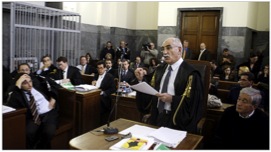
The New York Times’ editorial board today writes about the stark contrast between two court decisions on extraordinary rendition:

Two courts, one in Italy and one in the United States, ruled recently on the Bush administration’s practice of extraordinary rendition, which is the kidnapping of people and sending them to other countries for interrogation — and torture. The Italian court got it right. The American court got it miserably wrong.

In Italy, a judge ruled that a station chief for the Central Intelligence Agency and 22 other Americans broke the law in the 2003 abduction of Osama Moustafa Hassan Nasr, a Muslim cleric who ended up in Egypt, where he said he was tortured.

Two days earlier, a federal appeals court in Manhattan brushed off a lawsuit by Maher Arar, a Syrian-born Canadian citizen who was seized in an American airport by federal agents acting on bad information from Canadian officials. He was held incommunicado and harshly interrogated before being sent to Syria, where he was tortured. He spent almost a year in a grave-size underground cell before the Syrians let him go.

The United States Court of Appeals for the Second Circuit decided that none of that entitled Mr. Arar to a day in court.

In Mr. Nasr’s case, authorities said that they had reason to suspect he was involved in recruiting militants to go to Iraq. It has long been established that Mr. Arar was not guilty of anything. Canada admitted that it had supplied false information to American authorities, and in 2007, it apologized and offered Mr. Arar $10 million in damages. Neither the Bush nor Obama administrations followed suit, leaving Mr. Arar to pursue litigation.

In June 2008, a three-judge panel of the same court dismissed Mr. Arar’s civil rights suit on flimsy grounds. The court then took a rare step, scheduling a rehearing before all of the court’s active members before an appeal was filed. Sadly, the full court’s decision is even more insensitive to the violation of his rights and the courts’ duty to hold government accountable for breaches of the law.

Written by Chief Judge Dennis Jacobs, the 59-page majority opinion held that no civil damages remedy exists for the horrors visited on Mr. Arar. To “decide how to implement extraordinary rendition,” he wrote, is “for the elected members of Congress — and not for us as judges.” Allowing suits against policy makers for rendition and torture would “affect diplomacy, foreign policy and the security of the nation,” Judge Jacobs said.

The ruling distorts precedent and the Constitutional separation of powers to deny justice to Mr. Arar and give officials a pass for egregious misconduct. The overt disregard for the central role of judges in policing executive branch excesses has frightening implications for safeguarding civil liberties, as four judges suggested in dissenting opinions.

It is painful to recall that this is the same federal circuit court that declared in 1980 that even foreigners accused of torture in foreign countries can be called to account in American courts. The torturer is the “enemy of all mankind,” the Court of Appeals for the Second Circuit declared back then. One of the dissenters, Judge Guido Calabresi, said that “when the history of this distinguished court is written, today’s majority decision will be viewed with dismay.”

The damage to Mr. Arar, America’s reputation and the rule of law is already quite plain. The Supreme Court should reverse this ruling

[Emphasis added]

Forget for a moment that both these cases raise alarming questions about inchoate crimes for terrorist suspects (when do we decide a person is a criminal based on his potential for committing future crimes long before a crime has actually been committed?).

What is most striking about these cases is that they show a gross disregard for and lack of confidence in the judicial systems of democratic states. For example, in the Italian case, the CIA unilaterally decided that it was better to have Osama Moustafa Hassan Nasr tortured in Egypt than arrested and prosecuted in Italy. And in Mr. Arar’s case, the CIA – now with the deference of the Second Circuit – once again affirmed that total lack of faith in the American justice system for enforcing and prosecuting the law. So what are we trying to establish in countries like Iraq and Afghanistan? A Jeffersonian legislative democracy with an Egyptian and Syrian judicial system?

8 Comments

Filed under Essays