Anzar’s Turn

anzar.jpg

A few months ago, I wrote a post asking Spanish president Zapatero to kindly mind his own business. Now it’s time to politely ask former Spanish president Jose Maria Aznar (or “Anzar” as George W. Bush used to mispronounce) to quiet himself.

According to El Mundo, Aznar has labeled Obama’s victory a “historic exoticism” (“un exotismo histórico”). Maybe he’s referring to the color of Obama’s skin, or maybe he’s thinking about how exotic it would be in Spain if Aznar’s Partido Populuar were to have open and transparent primary elections to decide its presidential candidate. Unlike in the U.S. where a virtually unknown candidate was able to topple his party’s embedded hierarchy (ie, Hillary), in Spain the parties choose their candidates by petit comité — the result being that popular and electable candidates like Gallardon and Aguirre are blockaded from the national scene by the prolific loser Mariano Rajoy. Maybe the lesson that Aznar should be taking from the exotic U.S. election is not that an African American can reaffirm the American dream, but that transparency and political accountability are what make a democracy strong.

A lesson that both Aznar and Zapatero should have learned is that friendly democracies like the Spanish and American ones don’t openly and publicly take sides in the other’s elections. It is silly and counter-productive for Aznar to portray himself as a Republican and even discuss the merits of the candidates. Frankly, having once put his feet up on Bush’s table does not qualify Aznar, for example, to opine about Sarah Palin’s future in politics. Likewise, ZP should cease openly supporting candidates in domestic European elections as he had done with Obama during the U.S. elections.

Finally, the vice-secretary general braintrust of the PSOE (Zapatero’s party and Aznar’s rival) Jose Blanco has called Aznar’s statements about Obama racist.  That may be so, but then Blanco should definitely criticize the similar commentary made regularly throughout the Spanish press. Just as an example, the section in El Mundo on the U.S. Elections is titled “A Black President for the White House“, highlighting the “changing color of history”. Get it? Obama is black, the White House is white. That’s not racism, it’s cleverly highlighting the exotic historic facts. Right?

Leave a comment

Filed under Essays, Living la vida española

Great T-Shirts

tshirts.jpg

Here are two great t-shirts. The first one is a t-shirt of Che Guevara wearing a Che Guevara t-shirt. My father was a sporting his all Christmas (my mom bought it at The Onion’s online store). The farce of Che-worship makes this t-shirt an instant classic.

The second is the NJ Turnpike t-shirt (which I proudly wore on Thanksgiving), available at select New Jersey Turnpike rest stops. For anyone familiar with the Turnpike, the humor inherent in the t-shirt warrants no further elaboration. For the rest of you, just consider yourselves lucky.

4 Comments

Filed under Digressions

New Year, New Books

books2009.jpg

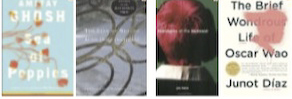
After a Y2008 reading list characterized by foreign novels and non-fiction, for 2009, I have decided to stack up on and read more books originally written in English. These include

Sea of Poppies by Amitav Ghosh
The Line of Beauty by Alan Hollinghurst
Hairstyles of the Damned by Joe Meno
The Brief Wondrous Life of Oscar Wao by Junot Diaz

The latter three all recommended by my friend Melissa. I have also included one Moroccan book — Year of the Elephant by Leila Abouzeid — and the French novelist Michel Houellebecq’s Elementary Particles. Finally, I have not been reading very many novels written in Spanish recently, but when I get back to Madrid, I will try to get a copy of something by Roberto Bolaño. Any recommendations?

5 Comments

Filed under Literature

Old Jazz for a New Year

golson.jpg

For 2009, I have come back from 10 days in beautiful and peaceful Boca Grande, Florida with a fresh supply of Jazz, including

I also got a some nice pickings of African and Arabic music and some Hip-Hop from my bro.

Leave a comment

Filed under Jazz

Jacked

250px-airtran_airways_logosvg.png

I just read a news story about how nine American Muslims of South Asian descent were removed from an AirTran flight (between DC and Orlando) because a few of them had been overheard discussing airplane safety aboard the plane prior to taking off.

The airline’s spokesperson rationalized the decision to remove the passengers because “someone heard something that was inappropriate, and then the airline decided to act on it.” Coincidentally, the white guy sitting behind me on my Wednesday flight from Sarasota to Atlanta (on route back to Europe) made an almost identical comment. I wonder what amounts to “inappropriate” speech on a plane: the words or the ethnicity of the speaker. So much for post-racial America.

1 Comment

Filed under Essays

2008 Favorites

heart-does-not-bend.jpg

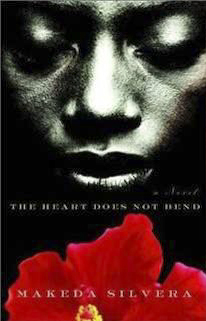
In general, I prefer fiction over non fiction, but in 2008 — for no reason in particular, I read more non fiction that ever. These works were both interesting and informative:

There were also a few very good, fast paced novels that I would recommend, such as

Overall, though, my top favorites for the year were Continue reading

Leave a comment

Filed under Literature

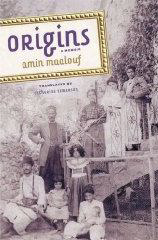
Origins

maalouf-origins.jpg

Earlier in the week, when we were still living in 2008, I finished Amin Maalouf’s Origins: A Memoir about his paternal grandfather and great uncle. The book alternated between being fascinating and downright boring, depending whether the author’s tales were of limited family or general interest. The best of the book were its tales of emigration (notice how we tend to romanticize our forefathers as Émigrés while today’s similarly situated migrants are the less stylized “immigrants”) and the following observation:

All too often we tend to equate the two attitudes, with the assumption that nationalism is an acute form of patriotism. In those days – and in other eras as well – this could not have been further from the truth: nationalism was the exact opposite of patriotism. Patriots dreamed of an empire where diverse groups could coexist – groups speaking different languages and professing different beliefs, but united by a common desire to build a large modern homeland. They hoped to instill a subtle Levantine wisdom into the principles advocated by the West. As for the nationalists, when they belonged to an ethnic majority they dreamed of total domination, and of separatism when they belonged to a minority. The wretch Orient of our day is the monster born of the two combined.

We still confuse the two today.

Leave a comment

Filed under Literature

Gone Fishing

gone-fishin.jpg

In the meantime, have a Merry Christmas.

Leave a comment

Filed under Digressions

Trying Too Hard

During my first year in Spain there was a song called “Bomba” by King Africa that played incessantly in every nightclub and bar across the country. A dance craze had formed around the song, similar to that of “La Macarena“, and whenever King Africa sang the words “un movimiento sexy” all the women on the floor would move their hips back and forth feigning sexiness. This forced attempt at sex appeal was almost always painful to watch because, as you can guess, there is nothing more ridiculous, unnatural and unappealing than someone trying to be sexy.

I had almost forgotten about “Bomba” and its “movimiento sexy” until recently. I was at a bar in Madrid and a girl in her early mid 20s standing close to me was telling the gentleman next to her, in what I can only assume was an attempt to impress him, that in bed she “always has to be the one in control”. From that moment on, I spent the evening giving this woman imaginary answers to her contrived attempt at sex appeal — for example, how I wouldn’t be interested in someone who was closed minded, self-centered,  inflexible, incapable of adapting or varying her repertoire, “my way or no way”, lacking in spontaneity, and an overall control freak. But I thought the best response would have been, “what a shame that we’re so incompatible. I too always have to be the one in control”.

Coincidentally and much to my surprise, a few days later I turned on the television and guess who I saw starring in a low-budget Spanish soap opera? None other than the girl who was trying too hard.

2 Comments

Filed under Digressions, Living la vida española

Krugman, Right On

nyt-krugman.jpg

A few months ago during the presidential election, I criticized John McCain’s call to fire SEC chairman Cox; I didn’t think that it gave the right signal. Nevertheless, now after the Madoff scandal where it appears that the SEC failed to act, someone at the Commission must pay the political price and that person should be its chairman.

What I find so interesting about the financial crisis is how “professionals” who are rewarded for generating so much wealth on Wall Street have in reality destroyed so much of the economy elsewhere. In an excellent article in the New York Times, recent Nobel Prize winning economist Paul Krugman writes,

The financial services industry has claimed an ever-growing share of the nation’s income over the past generation, making the people who run the industry incredibly rich. Yet, at this point, it looks as if much of the industry has been destroying value, not creating it. And it’s not just a matter of money: the vast riches achieved by those who managed other people’s money have had a corrupting effect on our society as a whole.

Let’s start with those paychecks. Last year, the average salary of employees in “securities, commodity contracts, and investments” was more than four times the average salary in the rest of the economy. Earning a million dollars was nothing special, and even incomes of $20 million or more were fairly common. The incomes of the richest Americans have exploded over the past generation, even as wages of ordinary workers have stagnated; high pay on Wall Street was a major cause of that divergence.

But surely those financial superstars must have been earning their millions, right? No, not necessarily. The pay system on Wall Street lavishly rewards the appearance of profit, even if that appearance later turns out to have been an illusion.

Meanwhile, as I have mentioned previously, we have a double standard when it comes to the auto industry with its blue collar workers and the suits in Wall Street. The former is highly educated and qualified, and the latter is antiquated and pre-disposed to fail due to its own decadence and mismanagement. Haven’t both industries both failed? One of the biggest problems is how we reward people and then celebrate those people for having rewarded them, regardless of whether or they actually no what they are doing. As Krugman puts it,

there’s an innate tendency on the part of even the elite to idolize men who are making a lot of money, and assume that they know what they’re doing.

And as I have witnessed too often, the idolized tend to be the least capable, the least knowledgeable and yet the most free to express their unqualified opinions. Welcome to Ortega y Gasset’s Revolt of the Masses.

Leave a comment

Filed under Essays