It looks like the scary keeps getting scarier, and we were fighting our own Christian jihad in Iraq. At least that’s how Donald Rumsfeld wanted George W. Bush to see it, as recently revealed in GQ. Warning, Bible verses may be disturbingly out of context.
Shameful and Scary

While the Sunday shows, like This Week with George Stephanopoulos, mindbogglingly focus on what Nancy Pelosi knew about torture — come on, they all knew, Republicans and Democrats alike — and allow Dick Cheney to stay out of jail by changing to the debate to whether Obama is making the country less safe, we are slowing learning more about the extent to which the Bush administration broke the law and manipulated the American public. We are told that it was to make the country safer and that the country was in fact made safer, yet the only fact we know for sure is that after eight years, two ongoing wars, and the total collapse of the American economy, Exxon Mobile is the most profitable company in the land.
In his column in today’s New York Times, Frank Rich, in calling on Obama to investigate the Bush administration, surveys the latest in what we are now learning about the former administration’s campaigns to deceive the American people. His article is very disturbing: Continue reading
Filed under Essays
Thank You, George Will

On today’s This Week with George Stephanopoulos, conservative pundit George Will correctly pointed out the absurdity in the notion that Guantanamo detainees are too dangerous to try in the U.S.
The supermax prisons in our country are full of Americans who have killed Americans and are perfectly safe, so the idea that we cannot find a place to house these few people who are very dangerous strikes me as preposterous.
Agree with him or not on policy, Mr. Will (along with maybe David Brooks) is one of only a handful of conservative commentators who are intellectually curious and consistently stick to their political principles regardless of the politics of the day.
The Cheney Stay Out of Jail Tour

They say that the criminal always returns to the seen of the crime. That’s exactly what Dick Cheney is doing as he tours the airwaves in an attempt to distort the conversation about breaking the law and to ultimately stay out of jail.
While many in the press debate about Just-Trust-Me Dick’s motives – save the former administration’s historical legacy, reclaim the voice of the GOP, or tarnish the new administration and the Democrats – I think his goal is pretty clear: to stay out of jail. The facts are crystal clear, no matter how you look at them. The Bush administration through its enhanced interrogation program (and other similar anti-terrorism measures like the Rendition program) blatantly and flagrantly violated the law and committed crimes.
That Nancy Pelosi or anyone else in Congress knew about it, that the press coddled the administration, that the American people wanted vengeance, and that the Obama administration is selling-out are irrelevant. There are no mitigating factors in torture, kidnapping and false imprisonment. There is no self-defense defense. Continue reading
Epistrophy
I am doing some serious spring cleaning on this holiday Friday (it’s San Isidro, the patron saint of Madrid) and trying to take my mind off of being infuriated by the tortuous logic behind Cheney’s rationalization that it’s alright for the executive branch to secretly and grossly break as long as they can allege, after the fact, that the crimes were in the interest of national security.
Helping to distract me is this fantastic version of Thelonious Monk’s “Epistrophy” performed here by Eric Dolphy. It’s from Last Date, one of Dolphy’s last recorded performance prior to his death. Dolphy is playing the bass clarinet and is accompanied by an all European rhythm section of pianist Misha Mengelberg, bassist Jacques Schols, and drummer Han Bennin.
Filed under Digressions, Jazz
Drown

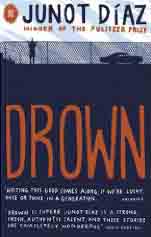
I am just finishing Drown, Junot Diaz’s book of short stories.
Actually, when I first heard of Junot Diaz’s Pulitzer Prize winning The Wondrous Life of Oscar Wao, I was initially reluctant to give it a try. Then I heard Diaz read his short story “How to Date a Brown Girl (Black Girl, White Girl, or Halfie)” (from Drown) on the New Yorker Fiction podcast. I was immediately sold, got myself a copy of Oscar Wao, and to date it is my favorite book this year.
As you can imagine, after Oscar Wao I eventually made my way to Drown, and just now I reached “How to Date a Brown Girl (Black Girl, White Girl, or Halfie)”. I think I enjoyed it even more the second time. If you don’t have a copy of book, go ahead and give the story a listen.
Filed under Literature
Rue Montorgueil
For the past year, I have been quite fortunate to be able to spend, on average, one week a month in Paris.
One of my favorite places to take a stroll is down the Rue Montorgueil, featured in the above video.
Filed under Digressions
Rabat Medina

Last week I spent seven days in Rabat, Morocco with my future family-in-law. I always wish afterwords that I had taken more photos because the few that I do take never quite do the surroundings justice.

In any event, here are two photos from Rabat’s medina (or old city quarter), built mainly by Muslims and Jews expelled from Spain in the 1600s (coming principally from Hornachos, Extremadura).
Filed under Digressions
The Establishment Media’s Double Standard

I have recently complained about the poor state of professionalism of the establishment media in America and how embedded journalists have contributed to the former administration’s propaganda campaigns. At the same time, though, I have become a big fan of Glen Greenwald who, though one may disagree with his politics, is playing the formidable role at Salon.com as a journalistic watch dog.
For example, in three recent pieces — “UAE ‘torture’ scandal and cover-up sparks outrage in the U.S.“, “The NYT’s definition of blinding American exceptionalism” and “Roxana Saberi’s plight and American media propaganda” — Greenwald calls out the media big wigs on their double standard in decrying the activities of foreign actors while practically ignoring similar behavior by the U.S. government. In the latter piece, he compares the hypocritical press’s attention to the American journalist’s imprisonment in Iran with their unwillingness to cover any of the U.S. government’s detentions without trial of journalists as part of the “War on Terror”. Greenwald writes,
Many people scoff at the notion that the American media propagandizes the American citizenry, but here one sees the vivid essence of that process. Our establishment media loves to point to and loudly condemn the behavior of other governments as proof of how tyrannical and evil they are — look at those Iranian mullah-fanatics imprisoning journalists/look at those primitive, corrupt, lawless Iraqis and their “culture of impunity“/look at the UAE and their tolerance of torture — while completely ignoring, when they aren’t justifying, identical behavior by our own government.
In Iran, at least Saberi received the pretense of an actual trial and appeal (one that resulted in her rather rapid release, a mere three weeks after she was convicted), as compared to the journalists put in cages for years by the U.S. Government with no charges of any kind, or as compared to the individuals whom we continue to abduct, transport to Bagram, and insist on the right to imprison indefinitely with no charges of any kind. Who was treated better and more consistently with ostensible Western precepts of justice and press freedoms: Roxana Saberi or Sami al-Haj? Saberi or Bilal Hussein? Saberi or Ibrahim Jassam? Saberi or the Bagram detainees shipped to Afghanistan and held in a dank prison, away from the sight of the entire world, without even a pretense of judicial review, a power the Obama administration continues to insist it possesses?
Pointing to other governments and highlighting their oppressive behavior can be cathartic, fun and gratifying in a self-justifying sort of way. Ask Fred Hiatt; it’s virtually all he ever does. But the first duty of the American media — like the first duty of American citizens — is to oppose oppressive behavior by our own government. That’s not as fun or as easy, but it is far more important. Moreover, obsessively complaining about the rights-abridging behavior of other countries while ignoring the same behavior from our own government is worse than a mere failure of duty. It is propagandistic and deceitful, as it paints a misleading picture that it is other governments — but not our own — which engage in such conduct.
I recommend that you read these articles.

Filed under Essays