Category Archives: Literature

The White Tiger

white-tiger.jpg

Other than having a beautiful yet unknown actress, I couldn’t really grasp all of the hoopla surrounding Slumdog Millionaire, this year’s Oscar winner for best film. Slumdog does give a few insights and images into the extreme poverty and precarious conditions of India’s impoverished (see “Slumdog Millionaire: Best Fiction Ever Set in India“) but is ultimately nothing more than a feel good Hollywood film with an improbable ending. Most of the time while watching the film, I kept thinking of the much more powerful novel A Fine Balance by Rohinton Mistry. Then last night I finished Aravind Adiga’s The White Tiger.

Slumdog and White Tiger have a lot in common. They both won major award (White Tiger won the 2008 Booker Man Prize). They are also both set in India and portray the class struggle, corruption, and hopes of the India’s underclass. But between the two of them, there is a world of difference. The White Tiger is a gritty, angry tale of a poor man’s rags to riches climb, unrepentant — though struggling to come to terms with the means — of what it takes to become and stay rich. On the other hand, Slumdog’s protagonist happily — thanks to Hollywood honestly, a little help of police good will and good fortune — achieve millionaire status; in other words, good trumps evil through goodness. So if you want to see great images of India and a pretty girl, then watch Slumdog. But if you want less picture perfect version of how the poor live in India, try The White Tiger or A Fine Balance.

Now on the cover of my edition of The White Tiger, the USA Today is cited as calling the novel “one of the most powerful books I’ve read in decades. No hyperbole. This debut novel hit me like a kick to the head — the same effect Richard Wright’s Native Son and Ralph Ellison’s Invisible Man.” Personally, though, while The White Tiger is definitely like a revolutionary’s quick to the head, for overall power and ever-lasting effect, I would probably rather go with A Fine Balance.

My cover also quotes John Burdett, author of Bangkok B. (I am not familiar with either the author or his book): “Adiga is a global Gorky, a modern Kipling who grew up mad. The future of the novel lies here.” Interestingly, I didn’t perceive the future but was reminded of previous novels. My first thought after just the first page was of Rashid Al Daif’s Dear Mr. Kawabata, about a dying Lebanese soldier at the end of the Civil War writing a letter to the famous Japanese author Yasunari Kawabata. The White Tiger is written in the form of a letter to the Chinese premier, recounting the narrator’s life as a poor servant and ending as a wealthy entrepreneur.

Writing from a servant’s perspective is nothing new and immediately recalls Kazuo Ishiguro’s Remains of the Day. Ishiguro’s butler is the epitome of British well-manneredness, of knowing one’s place and never breaking the code of class and its corresponding responsibilities. Adiga’s White Tiger is almost the same exact character except that Adiga’s servant eventually takes charge, forcing his way out of servitude and revolting. The White Tiger is, in a sense, the Indian revolutionary’s Remains of the Day.
1 Comment

Filed under Literature

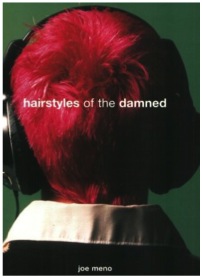
Hairstyles of the Damned

hairstyles.jpg

I just finished Hairstyles of the Damned by Joe Meno,  a coming of age tale about high school students set in 1990-91. Meno does a fantastic job of portraying all of the angst of high school: the conflict between trying to fit in and be unique at the same time, hormones run wild, parents and a loss of innocence about marriage and family continuity, and inevitability of adulthood. As reflected in the title, the characters’ hairstyles are one way that the teenagers define themselves. More interesting than their hair, though, is how music plays such an important role in their search for identity and belonging, but more so in what I would argue to be music’s role in moderating one’s emotions. Just think about how — be it metal, punk, hip-hop or dance — teenagers have always gravitated to loud music, muffling all of those conflicting voices that distract their already distracted minds.

Most of all, Hairstyles of the Damned simply reminded me of high school. Ironically, though, while so many of the characters resembled people I grew up with (I graduated one year before those in the book), my personal high school experience was completely different. For some reason, I never fell into any of those traps, for I was completely indifferent to being cool, fitting in, or listening to “cool” music. I spent my time playing soccer and listening to Reggae by myself. I was in my own world.

What I didn’t like about the book was that it made me feel old. Being a contemporary of characters set in a historic context, as mentioned in number 9 of 25, made me feel irreversibly fleeting, like the past.

2 Comments

Filed under Literature

The Line of Beauty

line-of-beauty.jpg

Last night I finished The Line of Beauty by Alan Hollinghurst, and true to the title, it was filled with lines of beauty. Like its namesake, Hogarth’s s-shaped Line of Beauty, the story is comprised of long curving sentences, so well-crafted that they feel like they could stand alone. But just as the words may be a thing of beauty, the s-shaped narrative (and syntax) also at times led my mind adrift and me to temporarily lose interest along the way. Nevertheless, the overall effect of the book is powerful. Set in the Thatcherite 80s amongst the snobby British elite, a young middle-class homosexual man, Nick Guest, steps into the dangers and hypocrisies of the times. Although it’s not a suspense or a who’s done it, I am reluctant to say more. Instead, I will give you one of my favorite lines from the beginning of the story, Continue reading

3 Comments

Filed under Literature

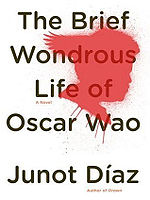
The Brief Wondrous Life of Oscar Wao

oscar-wao.jpg

So far, so good. Of my 2009 List, I am now two for two. I thoroughly enjoyed The Sea of Poppies, and I just finished the spectacularly beautiful The Brief Wondrous Life of Oscar Wao. Let me say that I didn’t realize just how “spectacularly beautiful” it was until I reach the very end. Throughout most of the book, I was simply engaged and enjoying the story – a coming of age tale of a nerdy, overweight and desperate immigrant kid, the New Jersey where he lives, the Dominican Republic where his family came from, the Diaspora, and the horrors of dictatorship and oppression. Furthermore, author Junot Diaz writes in an enviable vernacular prose mixing urban American English with Dominican Spanish. He even sneaks in my brother’s favorite word “baller” along the way.

What I particularly loved was how it was all a red herring, an excuse to hide a very simple fable-like story with an even simpler moral behind it all. Junot Diaz implements this whole ruse of colorful language, social and political commentary, and superstitious folklore to distract the reader’s attention so that when you finally reach the end and realize that the story is really not about Oscar Wao, it’s subtle message has a great impact.

And there I was the whole time along the way being duped — reading the book and thinking about my childhood best friend’s mother who was from the D.R., Dominicans in the Bronx and New Jersey (where my father and mother are from respectively), my increasingly Dominican hood in Madrid, the hardships endured by the nerds from my public school education, and Diaz’s cool ghetto Spanglish — and then . . . well, go ahead, read it and find out for yourself.

4 Comments

Filed under Literature

Sea of Poppies

seaofpoppies.jpg

I just finished Amitav Ghosh’s wonderful new novel Sea of Poppies. I have mostly positive things to say about the book. You can’t help but be in awe of Mr. Ghosh’s talent and ability to create richness. Each character is replete with his and her own tales and dialects. The novel is also just as rich with its hundreds of subplots — so much so that it’s hard to believe that the book is coming to an end as the number of remaining pages dwindles away.

I know Ghosh has intended Sea of Poppies to be the first in a trilogy, which hopefully explains why when the book finally came to its abrupt finale, I felt like the story was only just beginning. On finishing the last page, I immediately missed the characters and felt unsatisfied — not discontent with the book but with not knowing what was going to happen next — very much like I did when I finished the first season of Lost. Hopefully the next two volumes will be more rewarding than the subsequent Lost seasons; I gave up on Lost long ago.

Leave a comment

Filed under Literature

New Year, New Books

books2009.jpg

After a Y2008 reading list characterized by foreign novels and non-fiction, for 2009, I have decided to stack up on and read more books originally written in English. These include

Sea of Poppies by Amitav Ghosh
The Line of Beauty by Alan Hollinghurst
Hairstyles of the Damned by Joe Meno
The Brief Wondrous Life of Oscar Wao by Junot Diaz

The latter three all recommended by my friend Melissa. I have also included one Moroccan book — Year of the Elephant by Leila Abouzeid — and the French novelist Michel Houellebecq’s Elementary Particles. Finally, I have not been reading very many novels written in Spanish recently, but when I get back to Madrid, I will try to get a copy of something by Roberto Bolaño. Any recommendations?

5 Comments

Filed under Literature

2008 Favorites

heart-does-not-bend.jpg

In general, I prefer fiction over non fiction, but in 2008 — for no reason in particular, I read more non fiction that ever. These works were both interesting and informative:

There were also a few very good, fast paced novels that I would recommend, such as

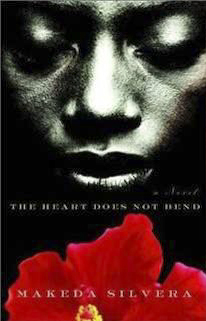
Overall, though, my top favorites for the year were Continue reading

Leave a comment

Filed under Literature

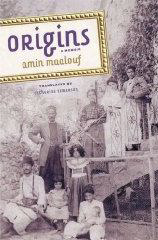
Origins

maalouf-origins.jpg

Earlier in the week, when we were still living in 2008, I finished Amin Maalouf’s Origins: A Memoir about his paternal grandfather and great uncle. The book alternated between being fascinating and downright boring, depending whether the author’s tales were of limited family or general interest. The best of the book were its tales of emigration (notice how we tend to romanticize our forefathers as Émigrés while today’s similarly situated migrants are the less stylized “immigrants”) and the following observation:

All too often we tend to equate the two attitudes, with the assumption that nationalism is an acute form of patriotism. In those days – and in other eras as well – this could not have been further from the truth: nationalism was the exact opposite of patriotism. Patriots dreamed of an empire where diverse groups could coexist – groups speaking different languages and professing different beliefs, but united by a common desire to build a large modern homeland. They hoped to instill a subtle Levantine wisdom into the principles advocated by the West. As for the nationalists, when they belonged to an ethnic majority they dreamed of total domination, and of separatism when they belonged to a minority. The wretch Orient of our day is the monster born of the two combined.

We still confuse the two today.

Leave a comment

Filed under Literature

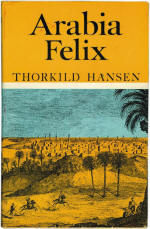
Arabia Felix

hansen.jpg

Last night I finished Thorkild Hansen’s Arabia Felix, about the fateful 1761-1767 Danish Expedition to Yemen. Although the book is very well-regarded in Denmark, Arabia Felix and his Slave Trilogy are all often out of print, difficult to find, or expensive in English. Nevertheless, I definitely recommend Arabia Felix. It is a fast-paced page turner (I finished it in three sittings) and reads more like a novel than non-fiction. Furthermore, the real life cast of characters is great with the rivaling personalities and heroic lone survivor.

Originally published in 1962, some of the terminology may appear out-dated, and Hansen also tends to embellish the story with his own interpretation of events. Nonetheless, Arabia Felix is such a good read that I am surprised it is almost unknown in the English reading public, especially at a time when the Middle East is very much on the radar.

Leave a comment

Filed under Literature

Tea in the Harem

tea-harem.jpg

After a two month hiatus, due in part to the presidential election and podcasts, I am finally back in the saddle again. Over the past few days, I finally finished Morocco Since 1830 and then Season of Migration to the North by Tayeb Saleh. I am now about half way into Medhi Charef’s Tea in the Harem, the first “beur” novel in France. There is a rawness to Charef’s novel that reminds me of that of Ryu Murakami’s Almost Transparent Blue and Coin Locker Babies, though Charef’s main character is a bit more empathetic. Perhaps, though, any attempt that Charef might have had back when the story was first published in 1983 to shock French society no longer feels so shocking today. On the other hand, Saleh’s 1969 Season of Migration to the North is much fresher and more poignant today.

Leave a comment

Filed under Literature