Category Archives: Literature

Nocturnes

nocturnes.jpg

I finally got back in the saddle again and this week finished three long-awaited books: Olive Kitteridge by Elizabeth Stout, Rhyming Life and Death by Amos Oz, and Nocturnes by Kazuo Ishiguro.

I have mixed feelings about Olive Kitteridge, this year’s Pulitzer Prize winning novel that just didn’t quite reach the same level as 2008’s The Wondrous Life of Oscar Wao. Throughout the book, I waivered between finding the writing style and structure (almost a compendium of short stories tied together by the ever present Olive Kitteridge) compelling to wishing that I was reading a ligher and more uplifting John Irving novel (Olive Kitteridge takes place in Maine and New England is the principle setting in Irving’s fiction). I was also reminded, believe it or not, of V.S. Naipaul whose protagonists, in particular Mr. Biswas, are often unlikeable characters, just as we are not always sure whether to root for Olive Kitteridge. Overall, though, while I recognize the writing talent and effectiveness of the story’s underlying theme – the inevitable loneliness of life, even in a picture perfect All American town – I suppose that I just don’t want to relate to such bleakness at this moment in my own life.

I am a big fan of Israeli writer Amos Oz’s works; I especially loved The Black Box. But with regards to his new novel, Rhyming Life and Death, I am really not sure what to say. Billed as reflecting “on writing, reading, middle age and the elusive chimera of literary posterity”, this meta-novella about a few hours in the day of a writer and his public left me almost completely indifferent. Just like with recent works by Coetzee focused on middle age and aging, Oz showcases his great ease with storytelling, but that’s about it. Nothing too memorable.

Finally, the book I thought I would enjoy the least, Ishiguro’s Nocturnes, I finished in just one sitting. Nocturnes’ five short stories all have a common thread – “love, music and the passing of time” – and unlike his other novels that are darker and more enigmatic, these stories were light and playful.  Usually when I finish an Ishiguro novel, with the exception of Remains of the Day and the heart-wrenching Never Let Me Go, I always feel slightly disappointed, possibly because his books have such great and promising titles: A Pale View of the Hills, An Artist of the Floating World, Remains of the Day, The Unconsoled, When We Were Orphans, Never Let Me Go, and now Nocturnes. I would love to be able to write novels with those names! Nocturnes, definitely not a magnum opus, at least left me wanting more, and definitely made up for me having to suffer The Unconsoled, possibly the most frustrating novel I have ever read (other than Celine’s Journey to the End of the Night which I quit after re-reading the first page ten times).

2 Comments

Filed under Literature

Underappreciated

man-without-qualities.jpg

In the summer, the Leonard Lopate Show runs an ongoing series of interviews about underappreciated works of literature. Last year, thanks to the Underappreciated episodes, I discovered the Tea in the Harem by Medhi Charef and Season of Migration to the North by Tayeb Salih.  A few days ago, Lopate was discussing the mammoth, unfinished (both by myself and the author) The Man Without Qualities by Robert Musil. I attempted to read this book a few years ago while on the beach in Fuerteventura, only to abandon it, slightly intimidated after 80 pages, for V.S. Naipaul’s much shorter A Bend in the River. Hopefully one day I will find my way back to The Man.

Promising works from this summer’s list include the short stories of Egyptian writer Yusuf Idris, the Slovenian novel Alamut by Vladimir Bartol, Andrei Bely’s Petersburg, and Paul von Heyse’s Children of the World, A Novel. In the past, Lopate has also featured one of my all time favorite works of Japanese fiction, The Makioka Sisters by Junichiro Tanizaki.

Leave a comment

Filed under Literature

Too Hot

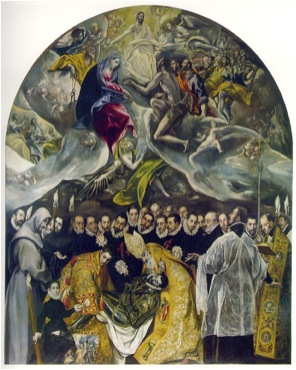
greco-orgaz.jpg

It’s hot, too hot. The daytime temperature in Madrid has not gone below 90F (30C) since the beginning of June, and I don’t have air conditioning. Three months of this continuous, unwavering heat takes its toll on you.

I could cool off at the local public pool, but that would be communism, right? Actually, I don’t go because a recent Leonard Lopate Show podcast totally turned me off to water leisure.

Sure, I would love to let myself get all worked up about

But it’s just too hot. Instead, I would rather spend time wedged between my fan and humidifier, finishing Olive Kitteridge, re-reading The Wind-Up Bird Chronicle, watching the new seasons of Mad Men and the continuously disappointing Weeds, following the revived Real Madrid, and stressing about my upcoming Moroccan wedding.

8 Comments

Filed under Digressions, Essays, Literature, Living la vida española, Obama 44

Tropic of Not Reading

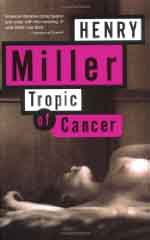
tropic-of-cancer.jpg

I am in a bit of a reading funk and have been stuck on Henry Miller’s Tropic of Cancer for over a month. Part of the problem is that I can only get myself to read the book when I travel. For practically a full month, it has been over 90F (+30C) in Madrid and I don’t have air conditioning. The last thing I need is to have the lights on at night to read, making the whole house even hotter.

The other problem is that, while the story is well written and interesting, once I put it down I am simply not motivated to pick it up again. Sure, part of me must have subconsciously (or consciously) bought the book because of the naked girl on the cover. But what made the story controversial, groundbreaking and exciting a few generations ago, now makes it feel vulgar and misogynistic. It is almost as if we’ve gone full circle: from shocking because it was vulgar to no longer shocking, making it just plain vulgar.

In any event, I think I have gotten to the point of the book where I’ve gotten the point of the book. Also, because the story really has no plot or suspense, I don’t feel compelled to learn how it ends. Add to the fact that I have a very interesting roster of books on deck, and things don’t look so good for the Tropics. Only the summer heat is keeping me from moving on. Well, that and maybe complaining about torture.

Leave a comment

Filed under Digressions, Literature

Paris, Clichés and New Books

bill-evans-paris.jpg

I am in Paris again and as I have said before, just a little bit of sun turns this city into, without a doubt, one of the most beautiful places in the world. And I love Pont Neuf, which for some reason is my image of the city. Yes, I know this all sounds pretty cliché, but let me add another cliché into the mix: the bread really is that good.

pont-neuf.jpg

Another common cliché about Paris is the poor quality of service. Nevertheless, in my interactions so far with the French bureaucracy, I have experienced the opposite. In one instance, a public functionary was even suspiciously pleasant. Taxi drivers and waiters are another question. While I would much rather eat food prepared in Paris, I would much rather eat it physically in Madrid where I don’t have to share the table with complete strangers while being barely attended to by someone who doesn’t like me.

Finally, Parisians are known for being pseudo-intellectual snobs. I can’t really attest to that, but the city definitely has an excellent cultural offering that simply wouldn’t exist without a demand for it. More importantly for me, Paris has a few excellent English language book stores, and now whenever I come to town, I refresh my reading list.

At the end of April I purchased three books all of which I have since finished and enjoyed: The Cosmic War by Reza Aslan, Drown by Junot Diaz and The Diving Pool by Yoko Ogawa. Yesterday I went back again and got copies of Olive Kitteridge, this year’s Pulitzer Prize winning book by Elizabeth Strout, Kazuo Ishiguro’s new Nocturnes, and Amos Oz’s latest novel, Rhyming Life and Death.

3 Comments

Filed under Digressions, Literature

Drown

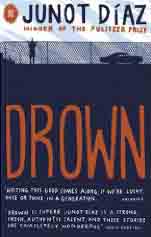
drown.jpg

I am just finishing Drown, Junot Diaz’s book of short stories.

Actually, when I first heard of Junot Diaz’s Pulitzer Prize winning The Wondrous Life of Oscar Wao, I was initially reluctant to give it a try. Then I heard Diaz read his short story “How to Date a Brown Girl (Black Girl, White Girl, or Halfie)” (from Drown) on the New Yorker Fiction podcast. I was immediately sold, got myself a copy of Oscar Wao, and to date it is my favorite book this year.

As you can imagine, after Oscar Wao I eventually made my way to Drown, and just now I reached “How to Date a Brown Girl (Black Girl, White Girl, or Halfie)”. I think I enjoyed it even more the second time. If you don’t have a copy of book, go ahead and give the story a listen.

Leave a comment

Filed under Literature

The Road

the-road.jpg

After an excellent run followed by a real funk, I temporarily abandoned 2666 and switched to Los Detectives Salvajes (as recommended by Sanjeev), but was still in the rut. Finally, I picked up The Road by Cormac McCarthy (thanks, Waya) and practically read the entire story in less than 24 hours. Although it is science fiction — in the sense that is post-apocalyptic — its minimalism gives the novel and its characters a haunting here-and-now realism.

Furthermore, there is something in The Road‘s story about a father and son trying to survive on the run after the general destruction of society that is probably not too unlike the realities of those displaced by war and war-induced famines in recent times in places like Sudan, Ethiopia, Somalia, Cambodia, and China. It doesn’t have to be science fiction.

While reading the book, I kept thinking about how it could be made into a film (as were McCarthy’s All the Pretty Horses and No Country for Old Men) and what that film would look and feel like. For some reason, Fellini’s La Strada immediately came to mind when I then realized that both McCarthy’s novel and Fellini’s film share the same name. Interestingly enough, The Road has already been adapted in a film of the same name to be released this year, yet it’s hard to believe that anything other than La Strada could capture the mood of McCarty’s book, even if the two stories are very different. Continue reading

Leave a comment

Filed under Literature

So Good Up ‘Til Now

Up until now, my new year’s reading list has been amazing. With the sole exception of Michel Houellebecq’s unmemorable Elementary Particles, I have devoured five gems:

But two weeks ago, I embarked on the very promising 2666 by Roberto Bolaño, but for some reason I have barely been able to get through fifty pages. Maybe it’s the fact that I am reading the novel in Spanish or that I have been distracted with other things, but I simply cannot get myself to care about any of the characters. They all seem very forced and trite, almost as if I had already read the story before and didn’t like it the first time. Furthermore, the interminable, never-ending, page long sentences, typical of both formal and informal Spanish writing, gets on my nerves. At times I find myself wondering if Bolaño was being paid by the word, or if he really needed to add yet another comma and phrase to the already uninteresting run-on sentence. “I got the point, Roberto, can we move on?” With the exception of Garcia Marquez’s beautiful sentences (Borges wrote short stories, not novels), I am beginning to question whether the Spanish language is cut out for novels. While I do believe Spanish, with its ability to reverse the order of the subject and predicate, is better suited to poetry than English, I do now have my reserves about Spanish prose.

In any event, I have yet to decide whether to keep fighting through the 1300 page 2666 — it might be great in the end — or to re-read something that I really love, preferably Haruki Murakami’s The Wind Up Bird Chronicle.

5 Comments

Filed under Literature

Always On the Side of the Egg

haruki-murakami.jpg

Haruki Murakami, one of my literally idols (see #7, “25 Things About Me“), won this year’s Jerusalem Prize for literature, and my friend Sorin just sent me the link at Haaretz to Murakami’s acceptance speech, entitled “Always on the Side of the Egg”. Check it out: Continue reading

3 Comments

Filed under Literature

The White Tiger

white-tiger.jpg

Other than having a beautiful yet unknown actress, I couldn’t really grasp all of the hoopla surrounding Slumdog Millionaire, this year’s Oscar winner for best film. Slumdog does give a few insights and images into the extreme poverty and precarious conditions of India’s impoverished (see “Slumdog Millionaire: Best Fiction Ever Set in India“) but is ultimately nothing more than a feel good Hollywood film with an improbable ending. Most of the time while watching the film, I kept thinking of the much more powerful novel A Fine Balance by Rohinton Mistry. Then last night I finished Aravind Adiga’s The White Tiger.

Slumdog and White Tiger have a lot in common. They both won major award (White Tiger won the 2008 Booker Man Prize). They are also both set in India and portray the class struggle, corruption, and hopes of the India’s underclass. But between the two of them, there is a world of difference. The White Tiger is a gritty, angry tale of a poor man’s rags to riches climb, unrepentant — though struggling to come to terms with the means — of what it takes to become and stay rich. On the other hand, Slumdog’s protagonist happily — thanks to Hollywood honestly, a little help of police good will and good fortune — achieve millionaire status; in other words, good trumps evil through goodness. So if you want to see great images of India and a pretty girl, then watch Slumdog. But if you want less picture perfect version of how the poor live in India, try The White Tiger or A Fine Balance.

Now on the cover of my edition of The White Tiger, the USA Today is cited as calling the novel “one of the most powerful books I’ve read in decades. No hyperbole. This debut novel hit me like a kick to the head — the same effect Richard Wright’s Native Son and Ralph Ellison’s Invisible Man.” Personally, though, while The White Tiger is definitely like a revolutionary’s quick to the head, for overall power and ever-lasting effect, I would probably rather go with A Fine Balance.

My cover also quotes John Burdett, author of Bangkok B. (I am not familiar with either the author or his book): “Adiga is a global Gorky, a modern Kipling who grew up mad. The future of the novel lies here.” Interestingly, I didn’t perceive the future but was reminded of previous novels. My first thought after just the first page was of Rashid Al Daif’s Dear Mr. Kawabata, about a dying Lebanese soldier at the end of the Civil War writing a letter to the famous Japanese author Yasunari Kawabata. The White Tiger is written in the form of a letter to the Chinese premier, recounting the narrator’s life as a poor servant and ending as a wealthy entrepreneur.

Writing from a servant’s perspective is nothing new and immediately recalls Kazuo Ishiguro’s Remains of the Day. Ishiguro’s butler is the epitome of British well-manneredness, of knowing one’s place and never breaking the code of class and its corresponding responsibilities. Adiga’s White Tiger is almost the same exact character except that Adiga’s servant eventually takes charge, forcing his way out of servitude and revolting. The White Tiger is, in a sense, the Indian revolutionary’s Remains of the Day.

1 Comment

Filed under Literature