Category Archives: Essays

Anzar’s Turn

anzar.jpg

A few months ago, I wrote a post asking Spanish president Zapatero to kindly mind his own business. Now it’s time to politely ask former Spanish president Jose Maria Aznar (or “Anzar” as George W. Bush used to mispronounce) to quiet himself.

According to El Mundo, Aznar has labeled Obama’s victory a “historic exoticism” (“un exotismo histórico”). Maybe he’s referring to the color of Obama’s skin, or maybe he’s thinking about how exotic it would be in Spain if Aznar’s Partido Populuar were to have open and transparent primary elections to decide its presidential candidate. Unlike in the U.S. where a virtually unknown candidate was able to topple his party’s embedded hierarchy (ie, Hillary), in Spain the parties choose their candidates by petit comité — the result being that popular and electable candidates like Gallardon and Aguirre are blockaded from the national scene by the prolific loser Mariano Rajoy. Maybe the lesson that Aznar should be taking from the exotic U.S. election is not that an African American can reaffirm the American dream, but that transparency and political accountability are what make a democracy strong.

A lesson that both Aznar and Zapatero should have learned is that friendly democracies like the Spanish and American ones don’t openly and publicly take sides in the other’s elections. It is silly and counter-productive for Aznar to portray himself as a Republican and even discuss the merits of the candidates. Frankly, having once put his feet up on Bush’s table does not qualify Aznar, for example, to opine about Sarah Palin’s future in politics. Likewise, ZP should cease openly supporting candidates in domestic European elections as he had done with Obama during the U.S. elections.

Finally, the vice-secretary general braintrust of the PSOE (Zapatero’s party and Aznar’s rival) Jose Blanco has called Aznar’s statements about Obama racist.  That may be so, but then Blanco should definitely criticize the similar commentary made regularly throughout the Spanish press. Just as an example, the section in El Mundo on the U.S. Elections is titled “A Black President for the White House“, highlighting the “changing color of history”. Get it? Obama is black, the White House is white. That’s not racism, it’s cleverly highlighting the exotic historic facts. Right?

Leave a comment

Filed under Essays, Living la vida española

Jacked

250px-airtran_airways_logosvg.png

I just read a news story about how nine American Muslims of South Asian descent were removed from an AirTran flight (between DC and Orlando) because a few of them had been overheard discussing airplane safety aboard the plane prior to taking off.

The airline’s spokesperson rationalized the decision to remove the passengers because “someone heard something that was inappropriate, and then the airline decided to act on it.” Coincidentally, the white guy sitting behind me on my Wednesday flight from Sarasota to Atlanta (on route back to Europe) made an almost identical comment. I wonder what amounts to “inappropriate” speech on a plane: the words or the ethnicity of the speaker. So much for post-racial America.

1 Comment

Filed under Essays

Krugman, Right On

nyt-krugman.jpg

A few months ago during the presidential election, I criticized John McCain’s call to fire SEC chairman Cox; I didn’t think that it gave the right signal. Nevertheless, now after the Madoff scandal where it appears that the SEC failed to act, someone at the Commission must pay the political price and that person should be its chairman.

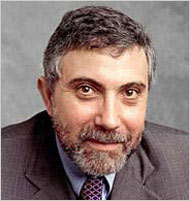
What I find so interesting about the financial crisis is how “professionals” who are rewarded for generating so much wealth on Wall Street have in reality destroyed so much of the economy elsewhere. In an excellent article in the New York Times, recent Nobel Prize winning economist Paul Krugman writes,

The financial services industry has claimed an ever-growing share of the nation’s income over the past generation, making the people who run the industry incredibly rich. Yet, at this point, it looks as if much of the industry has been destroying value, not creating it. And it’s not just a matter of money: the vast riches achieved by those who managed other people’s money have had a corrupting effect on our society as a whole.

Let’s start with those paychecks. Last year, the average salary of employees in “securities, commodity contracts, and investments” was more than four times the average salary in the rest of the economy. Earning a million dollars was nothing special, and even incomes of $20 million or more were fairly common. The incomes of the richest Americans have exploded over the past generation, even as wages of ordinary workers have stagnated; high pay on Wall Street was a major cause of that divergence.

But surely those financial superstars must have been earning their millions, right? No, not necessarily. The pay system on Wall Street lavishly rewards the appearance of profit, even if that appearance later turns out to have been an illusion.

Meanwhile, as I have mentioned previously, we have a double standard when it comes to the auto industry with its blue collar workers and the suits in Wall Street. The former is highly educated and qualified, and the latter is antiquated and pre-disposed to fail due to its own decadence and mismanagement. Haven’t both industries both failed? One of the biggest problems is how we reward people and then celebrate those people for having rewarded them, regardless of whether or they actually no what they are doing. As Krugman puts it,

there’s an innate tendency on the part of even the elite to idolize men who are making a lot of money, and assume that they know what they’re doing.

And as I have witnessed too often, the idolized tend to be the least capable, the least knowledgeable and yet the most free to express their unqualified opinions. Welcome to Ortega y Gasset’s Revolt of the Masses.

Leave a comment

Filed under Essays

Donations: The Revelations of Revelations

clinton-foundation.jpg

As an American living abroad, one thing that never ceases to amaze me are the all too commonplace, self-assured anti-Semitic cries about the Jewish black hand controlling American economic and foreign policy and thus dominating the world. Yes, the U.S. is unwilling to even second-guess Israeli actions and is all too often blindly and unreasonably pro-Israel even against its own interests (ironically Israeli citizens are more openly critical of Israel than Americans are).

Nevertheless, after a cursory review of the list of donors – finally made transparent – to the William J. Clinton Foundation, it is interesting to see that some of the heftiest donors populating the list were Arab state actors and individuals from Muslim countries, with the Kingdom of Saudi Arabia topping the list. Of course, a little further down there were also Jewish and Israeli donors, as well as plenty of people from other nationalities, religions and ethnicities.

In today’s Washington Post, Eugene Robinson comments that despite the transparency, there will be those who use the list to draw up new conspiracy theories about the new Hillary State Department. But what is most revealing about the donations may not be how much certain individuals gave, but how little. As Robinson writes, “times are tough”.

1 Comment

Filed under Essays

Same Sex Marriage and Christmas Music

rudolph.jpg

Today I was listening to Talk of the Nation and the discussion was about the Bible and Gay Marriage. One of the guests, Lisa Miller (religion editor at Newsweek), made the interesting argument that contemporary Christianity has already turned its back on and rejected the Bible’s depiction of marriage and marital practices — polygamist, sexist and procreation-centric. She also uses the fact that throughout the Bible slavery is nowhere condemned to argue that modern religion has already evolved with the changing morals of society. As a result, she argues that we can similarly reconcile the Bible with gay marriage, just as we can uphold the Bible and denounce slavery and polygamy.

On the other hand, guest Albert Mohler, president of the Southern Baptist Theological Seminary, made that absurd slippery slope argument that if same sex marriages were permitted the flood gates would open and we’d end up with polygamy (ironically sanctioned by his Bible) incest, and people marrying their pets and furniture. Nevertheless, he did say that he wanted to see gays and lesbians, as well as criminals and drug addicts in his church on Sundays because God loved all sinners. So I suppose that the sins of gays and lesbians naturally fit into a sentence ending with criminals and substance abusers.

Personally, I don’t see what the big deal is. We already know from the uglier part of our history that separate is not equal, so if the law is going to confer certain rights on one class of people, it has to do the same for others. Call it all marriage. You can still render unto God that which is God’s, and give Caesar his gay weddings at city hall. No one is telling Mr. Mohler or any other clergy-person that they have to marry gay people in their churches. It’s not like same sex civil marriage is going to suddenly force American churches to desegregate.

Furthermore, for those who think that somehow same sex marriage is bad for marriage, well, I don’t see how gay people could do much worse than us heterosexuals who have a 50% failure rate. What about gay people adopting and raising children? Would civilization come to its dramatic end? It’s time to face the facts, some of which Dan Savage pointed out last month in the New York Times,

Right now, there are 3,700 other children across Arkansas in state custody; 1,000 of them are available for adoption. The overwhelming majority of these children have been abused, neglected or abandoned by their heterosexual parents.

In other words, children are put up for adoption because their biological parents, by definition heterosexual, weren’t up to the task (or, as my bro explains, were taken away from them by the state).

But the real issue that I want to bring up here is Christmas. If the Bible is against gay marriage, then why is Christmas music trying to out everyone during the Holiday season? I was just listening to some of my Christmas favorites, and I could have sworn I heard Nat King Cole in “O Tannenbaum” sing something about a gay fräulein. And in “Have Yourself a Merry Little Christmas” we’re promised that our troubles will be left behind upon making our Yuletide gay. I don’t really know what a Yuletide is, but I am almost certain that “Deck the halls with boughs of holly” is homoerotic code. Then again, I’m not one to judge — judging is not supposed to be very Christian, at least not at Christmas.

6 Comments

Filed under Digressions, Essays

The Subprime Super Power

pelosi-bush.jpg

I know it’s not news and I have alluded to it before, but this whole talk about toxic loans and bailouts is a just one laughable joke. Everyone complained about how the auto executives flew into Washington on their private jets, but no one gave the Wall Street bankers the same scrutiny when they flew into town. How much worse was the auto industry’s management than that of Wall Street? Yes, American cars suck and nobody wants to buy them, but our investment banks weren’t that much better — otherwise they wouldn’t have crumbled.

What continues to shock me, though, is that our government is the most toxic of all the players. Recognize that we have been fighting two wars that have cost billions of dollars while the American people got a massive Bush tax cut. We talk about the costs to the American tax-payer of the trillion dollar bailouts, but the tax payers will not have their taxes increased. We simply borrow the money abroad, mainly from China. Our wars and our bailouts are being bankrolled by the Chinese. We are the world’s greatest toxic borrower; we are the Subprime Super Power.

It’s just like the private security forces that we outsourced to fight the war in Iraq because it would have been devastatingly unpopular to enlist a higher number of troops. We don’t mind fighting wars, as long as they don’t affect our bottom line: our taxes aren’t increased, and the wars are fought by minorities, poor white people, or military families. We pretend we care about the bailouts, but as long as our taxes aren’t increased to pay for them, we’re game.

Meanwhile, the right wing has blamed the toxic mortgages on the left wing’s liberal policies that forced banks to make loans to the poor and minorities who had bad credit. And most have agreed that a huge culprit has been the American public’s consumptive appetite to live beyond its means on credit. How different is that from our government paying for wars and corporate bailouts with borrowed money? Eventually someone’s taxes will be increased to pay the bill. Our politicians are betting that that time will come on someone else’s watch. As we’ve learned from Wall Street this year, the day of reckoning can come sooner than thought.

Leave a comment

Filed under Essays

Collective Innocence Part II

After having written Collective Innocence, I grew worried that I was becoming a touch radical in my views about how as a nation, we Americans allow ourselves to view the world in black and white, good and evil, and thereby justify, rationalize or overlook our own dubious acts both at home and abroad. Then I read the news about how the U.S. was purposefully silent after our Afghan ally hid its own war crimes. But is that so surprising?

After European colonization throughout the Middle East, the U.S. consistently supported repressive regimes (or the continuation of European dominance) in subversion of local grass roots democratic and social liberalization (including womens’ rights) for the sole purpose of hindering the spread of Soviet communism. Ironically, we now criticize that which we promoted — essentially dictatorships and theocracies — without ever acknowledging our share of the responsibility. We contrast Israel’s democracy with the tyranny in Syria, Iran and Sadam’s Iraq, yet we poured millions of dollars into Musharraf’s Pakistan since 9/11. We are huge financiers of Egypt and are best buddies with Saudi Arabia and Jordan.

We have a serious case of cognitive dissonance. Glen Greenwald does an excellent job of pointing this out in this week’s edition of the Bill Moyers Journal: Continue reading

1 Comment

Filed under Essays

Collective Innocence

fundacion_de_santiago.jpg

A few weeks ago while running at the gym, I was listening to a podcast of an interview on the Leonard Lopate Show with the now infamous William Ayers . While I am not qualified to comment on the veracity of Ayer’s accounts of the 1960s, I did find the following remarks by Ayers to be thought provoking:

We have never come to terms with the war in Vietnam, what we really did, what was lost there. in terms of purpose and so on. We haven’t learned what it means to invade and occupy a country. We haven’t accounted for responsibility. So while I get held up as somebody who was violent which I reject. I was not violent. Henry Kissinger gets a pass. There is something wrong with that. We ought to really have truth and reconciliation process if we want to understand what went on.

His words reminded me of another podcast I had listened to last year in November at the airport in Paris on my way back to Madrid. It was the Bill Moyers Journal podcast, and James H. Cone was talking about the history of lynching in America and how as a nation we refuse to recognize our collective guilt. For whatever reason, we take ourselves out of the historical context of our nation’s sins, and think of ourselves therefore as collectively innocent. How can I be responsible for slavery, the genocide of native Americans, or any serious of morally reprehensible actions committed by the nation before I was even born? As a matter of fact, even bringing up any of these matters can often times be considered anti-patriotic. Continue reading

3 Comments

Filed under Essays

Why Bombay?

mumbai.jpg

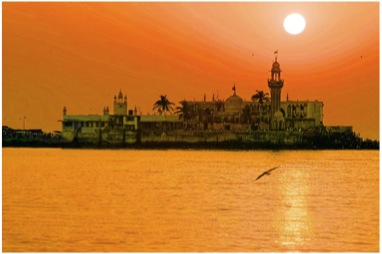
I have noticed over the past few weeks since the terrorist attacks in Mumbai that the press in Spain always refer to Mumbai as “Bombay”. At first I thought it was just El Pais where my friend, Teo, works, and that it was probably his fault. Then I looked at other newspapers like El Mundo and El ABC. None of them seemed to have gotten the news that in 1996 India officially changed the city’s name to Mumbai.

Then when I complained about it to my my girlfriend (who lives in Paris), she said that the French press also widely refer to the city as Bombay. When I then went to check Italian newspaper Corriere della Sera, I was first distracted by the abundance of scarcely dressed women all over its website, but then saw that Mumbai was most commonly used.

But for Spain and France, Continental Europe’s most prolific colonizers, why “Bombay”? It’s not like the case of Burma where for political reasons one may refuse to call the nation “Myanmar” in protest of its totalitarian regime. And while I understand that the average Joe may take more than 12 years to adapt to a distant city’s name change, you’d at least think the press could get it right and respect the will of a nation of one billion people.

3 Comments

Filed under Essays, Living la vida española

Bolívar’s Lesson to the República Bolivariana

bolivar-power.jpg

. . . nada es tan peligroso como dejar permanecer largo tiempo en un mismo ciudadano el poder. El pueblo se acostumbra a obedecerle y él se acostumbra a mandarlo; de done se origina la usurpación y la tiranía.

While Hugo Chavez, the former failed golpista and present day Venezuelan president a la Fidel, is doing his best to change his country’s constitution again. This time it isn’t to extend the number of terms he may serve in office, but to extend his “mandate” indefinitely.  One of Mr. Chavez’s first acts as president was to change the official name of Venezuela to the República Bolivariana de Venezuela, in honor of Bolívar, the Latin American champion of independence from Spain. Ironically, protest groups have been banned from hanging the above sign quoting Bolívar on the tyranny of extended presidencies.

Even more ironic, it appears that Spanish president Jose Luis Rodriguez Zapatero (“ZP”) may actually follow in the groundbreaking footsteps of his predecessor and political rival, Jose Maria Aznar. While Aznar’s presidency may have turned to shambles and his legacy ruined as a result of his handling of the March 11, 2004 Atocha train bombings and what has been widely perceived as his subsequent arrogance, Aznar should be remembered for his singular willingness to voluntarily step down from power. From 722 with Don Pelayo until Felipe Gonzalez lost in 1996, Spain has not been a country defined by voluntary transfers of power. Even after Franco’s +40 years in totalitarian control, the new Spanish constitution did not establish mandatory term limits for its chief executives. Aznar was the first Spanish leader in the nation’s history to make the promise and not seek reelection.

Rumor has it that ZP is considering following Aznar’s example. Maybe ZP, a Chavez apologist who tried unsuccessfully to resell U.S. military technologies to the supreme Bolivarian (probably in exchange for cheap oil), has been reading the anti-Chavez propaganda with an open mind. In the U.S., we’ve got George W., but at least we have a sure-fire system that safeguards us from having W. or others like him for more than 8 years.

7 Comments

Filed under Essays, Living la vida española