Category Archives: Essays

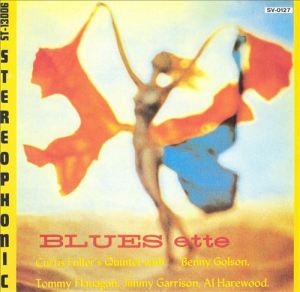
BLUES ette

Blues Ette

It’s that “Most Wonderful Time of the Year” when I am normally driving my family and neighbors crazy with Christmas music. While I’ve already got the tree up and probably exhausted my Christmas playlist, I have been more flexible this year and have found a little room for some non-festive tunes.

I just picked up trombonist Curtis Fuller’s BLUES ette, featuring Benny Golson, Tommy Flanagan, Jimmy Garrison and Al Harewood. And it’s highly recommended hardbop, if that’s your sort of thing. Also, if you are a Haruki Murakami fan like me, you’ll probably recall that the song “Five Spot at Dark” from this album was heavily featured in After Dark.

But if you would rather listen to Christmas music, the song I can’t get out of my head this year is “What Are You Doing New Year’s Evesung by Ella Fitzgerald.

Leave a comment

Filed under Essays, Jazz

The Vicious Cycle of American Meritocracy

It’s interesting that at a time when American corporations and the wealthiest in the country are being taxed at rates that are lower than at any other time during the last 100 years, one of the major political parties is trying to convince Americans that if we do not lower taxes even further on these players, then they will cease to do us the honor of creating the wealth that our nation desperately needs. Now despite that this is simply factual nonsense (during the largest periods of growth during the last century corporations and wealthy citizens, including Mr. Romney Sr., co-existed with a much higher tax burden), this makes no psychological sense. The drive to make money and to succeed, even at the top, is not that tax sensitive. Our wealthiest citizens are not going to suddenly elect poverty because they have to pay the taxes of their fathers. As mentioned, higher taxes during the 1950 and 60s and during Reagan and Clinton didn’t stop the rich Americans from becoming rich.

But one of the biggest problems our nation faces is a psychological disorder, a vicious self-fulfilling prophecy, where people are so convinced that their success and/or failure is due to their own merit, that they are completely disconnected from reality. This inevitably leads to a continuous cycle of nepotism, where those who merit success are limited to those who already belong to the club of the elite, while those who do not belong repeatedly fail, and said failure denies them the merit to achieve success.

In other words, where a society so values success and almost blindly believes that success is solely attributed to one’s own merit, anyone who is successful or unsuccessful is presumed to deserve their station in society, and society is completely and unquestionable content with and accepting of the consequences of having people who succeed disproportionately and those who fail miserably. So for example, we are fully capable of accepting that a corporation can outsource (don’t say “offshore”) jobs and slash employee salaries while increasing executive pay to amounts that simply do not coincide in any shape or form with the reality of the executive’s performance. Yet this disconnect is disregarded, ignored. The CEO achieved the American dream because he [must have] worked harder than all those salaried employees. Continue reading

Leave a comment

Filed under Elections 2012, Essays

The Clash of Civilizations: Between American Geo-Politics and American Ideology

This morning on the metro I was listening to a Leonard Lopate Show podcast where Leonard interviews Fredrik Logevall on his new book Embers of War: The Fall of an Empire and the Making of America’s Vietnam. What struck me as interesting was how Logevall described Ho Chi Min’s travels to New York and Boston, his great admiration for the U.S., and how his fierce anti-colonialism was inspired by the Declaration of Independence. As a matter of fact, most anti-colonialist movements after World War II were inspired by America’s independence, yet ironically, the U.S. was at the time, and continues to be to this day, staunchly pro-colonialist.

Logevall attributes the U.S.’s choice immediately after the World War II to side with French colonialism in Vietnam against independence not so much to the fear of the spread of communism, but for its desire to have a strong France strike a power balance across Europe.

Whether or not the same is also true for North Africa and the Middle East, the U.S. consciously choice to support colonialism, neo-colonialism (the replacement of a foreign power with an internal regime that treats its own country as if it were a colony), and right-wing dictatorships over populist, secular and pro-democracy movements in the name of fighting communism.

Morocco is a perfect example. After having suffered a generation of French and Spanish imperialism, when the U.S. troops arrived on Moroccan coasts, the contrast was striking (as Fatima Mernissi describes nicely in Dreams of Trespass). The American soldiers were clean, kind and respectful, unlike their European counterparts. After the War and prior to independence, when grassroots, pro-democracy groups were forming, armed with American democratic values, the U.S. government chose the French. And after Morocco achieved its independence some 10 years later, the U.S. government then chose the monarchy. It was better to have a dictatorship you could finance and military bases where you could park artillery than the threat that free elections posed: labor unions, socialism, dominoes falling.

Does this sounds familiar? Continue reading

Leave a comment

Filed under Essays, We The People

War as American Entertainment

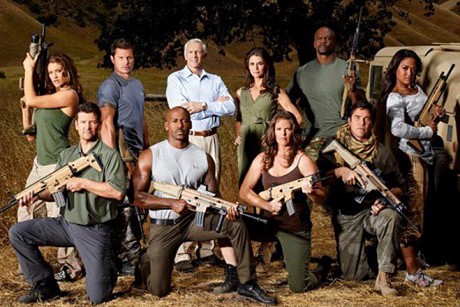
On Monday I was reading via Glenn Greenwald about NBC’s new military-meets-celebs reality show and how

Nine Nobel peace laureates have called on NBC to cancel this show, pointing out that “war isn’t entertainment” and “people—military and civilians—die in ways that are anything but entertaining,” adding: “Trying to somehow sanitize war by likening it to an athletic competition further calls into question the morality and ethics of linking the military anywhere with the entertainment industry in barely veiled efforts to make war and its multitudinous costs more palatable to the public.”

This got me back to my early posts on how we really are becoming more and more like a page out The Hunger Games every day.

Then yesterday afternoon I finally got around to starting Kurt Vonnegut’s classic Slaughterhouse Five and read,

[In response to the narrator writing a novel about his experience in World War II] Well, I know,” she said. “You’ll pretend you were men instead of babies, and you’ll be played in the movies by Frank Sinatra and John Wayne or some of the other glamorous, war-loving dirty old men. And war will look just wonderful, so we’ll have a lot more of them. And they’ll be fought by babies like the babies upstairs.”

So maybe we’re not suddenly becoming more like The Hunger Games, but have for a long time worshipped War as the ultimate heroic sport. Think about it. What other nation constantly produces year after year blockbusters centered around the victorious combatants? Arguably only the Chinese and Japanese have anything remotely comparable in their cultures. Meanwhile we continuously label other religions and cultures – who have absolutely no traces of violence in their popular entertainment — as innately murderous; this, of course, serving the purpose of perpetuating our own ongoing thirst for even more entertainment.

1 Comment

Filed under Essays, Literature

Propaganda Straight from the Hunger Games

Last month I wrote about Americans’ fascination with The Hunger Games and the cognitive dissonance between their love of the freedom fighting heroin in the book and their adoration of authority in real life.

Now after reading Glen Greenwald’s recent “Leon Panetta: macho Renaisance man” on 60Minutes‘ full-on propaganda campaign in favor of the White House’s war machine disguised as journalism, I was immediately reminded again of The Hunger Games. How can Americans, so enamored with Ms. Katniss, watch that 60Minutes segment and not immediately see clear as day that their beloved trilogy is a direct criticism of the times we are living in today. Pelley is playing the role of Caesar Flickerman in pure, unapologetic and unfettered government propaganda.

And here we are all licking it up. We get to believe we love freedom and hate totalitarianism, all while worshiping our pseudo-soldier-rulers at the same time.

1 Comment

Filed under Essays, Literature, Obama 44

What We Now Know About Torture

Over the weekend, I watched the extremely engaging Bill Moyers Show on “Reckoning with Torture“. While the issue of the use of “Torture” by the U.S. government post-9/11 has been controversial and one could accuse Bill Moyers and his two guests as having a “liberal” bias, the interview and what it exposes are nonetheless compelling. And while torture-deniers/apologists will argue that there is “nothing new” to learn about what the government did in fact do, I believe the video very much highlights the undeniable facts of what did occur, facts that are not fully understood by the general public at large and which, once omitted, watered-downed, or spun, aid in the public’s misconception that what was done was done as an absolutely necessary defensive action in the face an extreme and imminent threat:

  1. Worst of the worst: As early as by the end of 2002, the U.S. government was fully aware and apprised of the fact that the vast majority of the Guantanamo detainees (some 80%) were not — let me repeat that, were NOT — guilty of the alleged crimes for which they were being detained. The U.S. government continued (and in some cases continues) to hold these detainees in cages, with no rights or recourse of any kind, for over a half a decade even after knowing they were not guilty.
  2. A few bad apples: When we think of the most extreme cases of torture, we think of it as having been perpetrated by a few bad apples. Nevertheless, all of the documentation — both the internal memos down the “chain of command” and the evidence from interviews by the Red Cross with the detainees — reveal perfectly well that all actions taken towards the detainees were perfectly scripted and followed very clear guidelines. Torture was not a result of “bad apples” but of clear policy coming from the highest echelons of power. Continue reading

Leave a comment

Filed under Essays, Obama 44, We The People

The Myth of Personality: Some of my Best friends are Corporations

Mitt Romney has taken a lot of slack for his “I have some friends who are Nascar team owners” comment but much less pain for his even sillier “Corporations are people” remark. All we needed him to say was “Some of my best friends are corporations” to paint the perfect picture of his world of make-believe.

After the Citizens United case, the Supreme Court has reinforced the notion that corporations enjoy certain “human” protections under the law, specifically those related to the First Amendment right to free expression. In constitutional and practical terms that translates to mean that corporations have the unbridled right to express their political opinions by providing cash to politicians, political parties and political interest groups that, of course, any human – including Mr. 14% — could only dream of forking out.

But the entire issue of how campaigns can be financed is besides the point (though, as of the time of this post apparently Romney’s SuperPAC has raised +$100 million to Obama’s $9million). Mr. Romney was trying to say something – I can only imagine – about corporations, capitalism and the freedom from regulation that corporations must enjoy in a free society. So, if corporations are people, then they too should be free. That a corporation is in fact a person and should not be regulated is absurd. A guy who earned both a Harvard MBA and JD should know this.

As a matter of fact, a corporation is not the product of the free market, but of government intervention and regulation. Yes, that’s correct: corporations only exist because of convoluted state action and regulation that allow them to incorporate. Government is the mother of all corporations and regulation their father. Continue reading

Leave a comment

Filed under Elections 2012, Essays

The Hunger Games and Cognitive Dissonance

Earlier this year I fell into the great Hunger Games trap. Out of pure curiosity and as result of witnessing my nephews and (my own) mother literally consume the books, I decided to give the story a try. And the first one was great.

Not great as a literary achievement but as pure entertainment that also touched at the heart of the American fiber: our passionate, ingrained belief that we stand up for the underdog and up against tyranny. In a sense, The Hunger Games has the perfect formula to pull on the All American heartstrings. The main character is a young woman, fatherless and coming of age in a simple miners’ town, subject to the cruelties of a brutal elitist despot class that is reminiscent of both the nation’s past subjugation at the hands of King George and the contemporary shallowness of “ reality TV”.  Add an element of a love story and how could an American not fall head over heels for Kantiss? It is the kind of tale that has the Declaration of Independence in its DNA.

Yet the irony is that just as we think we love the guy who fights the power, who stands up against the Elite-run media, the State, the For-and-By-the-Leader, isn’t that what we have become? Can’t The Hunger Games be read not as a tale of how the American people won independence from the British Crown but of how that independence is being lost?

In reading an article written today by Glenn Greenwald on the mainstream media’s government stenography (specifically, how Brian William’s recent story on the Bin Laden killing was nothing more than pure pro-White House propaganda), I was immediately reminded of Caesar Flickerman, the Capitol’s reporter-in-chief. We are more like the Capitol than like the Thirteen Colonies.

So do we love or hate authority? Here’s Greenwald from at the time I was reading The Hunger Games:

As Digby recently observed, after posting a great Tom Tomorrow cartoon on the willingness of progressives like this to accept and defend these absues from Obama: “The fact is that deep down, many Americans really want to be subjects.” They just want their benevolent tyrant to be a sophisticated, East Coast-sounding, eloquent orator — just like conservatives wanted theirs to be a swaggering, evangelical Christian cowboy — because those tribal familiarities ensure that your leader will be exempt from the universal corruption of vast emperor-like powers exercised in the dark (I want this person assassinated; I want this person imprisoned; I will not account to anyone for my decrees, etc.). I can’t tell you how many times during the Bush years I heard this from conservatives: you’re paranoid if you think Bush would do evil things because he’s a good man. As Scahill summarized this mindset last night: “Trust But Don’t Verify. Don’t Question Authority. Speak Power to Truth.”

We love to think of ourselves one way while we are secretly the opposite, like the homophobes’ latent homosexuality. No where else in the world are people so “distrusting of government” yet constantly worshiping the police, capital punishment, the military and their president as the warrior chief.

And that is the inherent irony of The Hunger Games and the American mind. We love the hero who defies power in fiction and history, because in the here and now, in our real lives, we are glued to our televisions cheering our leaders on, no questions asked lest you be the villain.

And if you’re asking: read the first one, but leave it there. Installments two and three go from disappointing to a waste of time.
2 Comments

Filed under Essays, Literature

The Fourth of July, Petraeus and Afghanistan

4th-of-july-afghanistan.jpg

Living abroad for so many years, often times than naught, the unique all American holidays come and go with almost no fanfare. Days like Thanksgiving, Martin Luther King Jr.’s Birthday and the Fourth of July. Today I only realized that it was the Fourth of July after coming across the following headline, “Petraeus Marks July 4 with Troops in Afghanistan”.

I clicked on the link and read what I had expected of the nation’s favorite warrior-turning-politician to so cynically spew to our troops in Afghanistan,

“I cannot say how impressive your action is,” he said. “It is the most meaningful display of patriotism possible.”

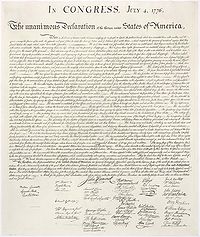
Unlike the General — who can do no wrong because he is a general — I have always loved the Fourth of July, not for the barbecues, cold beer, fireworks (though as a kid, I loved how my grandmother would light sparklers for us and let us hold them), or flag displays, but for the perfect text of the Declaration of Independence, signed … you guessed it, on the Fourth of July.

The Declaration of Independence is the covenant par excellence setting forth the relationship between a people and their government upon which all modern democracies exist. I know of no better expression of the natural law of nations. It is the true birth of republicanism.

So how do we marry the “most meaningful display of patriotism possible” with the occupation of a foreign people, unforgivable quantities of civilian collateral deaths resulting therefrom, and the criminalization of all resistance to that occupation with the Fourth of July – our American celebration of the expression of a people’s will to self-governance and the desire for divorce from the foreign power that mandates from afar?

Instead of celebrating independence through occupation, a greater display of patriotism would be to read the Declaration of Independence on its birth day and demand that your government lives up to its spirit at home, not abuse it abroad: Continue reading

Leave a comment

Filed under Essays

A Picture is Worth a Thousand Words

future-of-the-church.jpg

Don’t mean to be a hater here, but this picture says so much about the present and the future of the Church. As it is not really my religion to critique, I will leave it up to Catholics to editorialize.

Leave a comment

Filed under Essays